



A failure-mode guide for grit, fibers, fats, biological solids, chemicals, and variable wet-well duty.
Wastewater and sludge seals fail for more than abrasion. Grit scores faces; fibers and rags wrap or pack around components; fats and biological solids create deposits; level swings and blocked suction cause poor lubrication; cleaning chemicals attack elastomers and metals. Diagnose the material and operating event before changing face hardness.
| KEY TAKEAWAY |
| Characterize both the normal stream and the bad day: peak grit, wipes/rags, grease, polymer, industrial discharge, cleaning chemicals, temperature, level control, dry-running risk, starts per hour, and standby settling. Then match the seal, chamber, materials, and support plan to that full envelope. |
Practical Engineering Perspective
In wastewater reviews, the debris found around the seal is often more useful than the plant’s average TSS number. A few stringy fibers can immobilize springs or damage an external component even when the bulk solids concentration looks modest.
This article reflects HydroMax Seal’s published product and service categories plus established mechanical-seal engineering practice. It does not claim that every duty has been field-tested or that any configuration guarantees a specific runtime. For a high-consequence or unfamiliar application, use verified equipment data, representative process information, technical approval, and written acceptance criteria before procurement.
Grit: The Classic Abrasive Wear Problem
Sand and grit entering collection systems behave like textbook abrasive particles-hard, angular material that scores seal faces through direct contact, the same mechanism covered in detail on our main slurry pump seal failure page. Lift stations and headworks-adjacent pumps see the highest grit loading, and the standard abrasive-wear countermeasures apply: a restriction bushing sized correctly, a reliable external flush where the process fluid itself isn’t clean enough to serve as flush media, and face materials selected for the actual particle hardness and concentration rather than a generic “wastewater-rated” spec.
Ragging and Solids Packing: A Different Mechanism Entirely
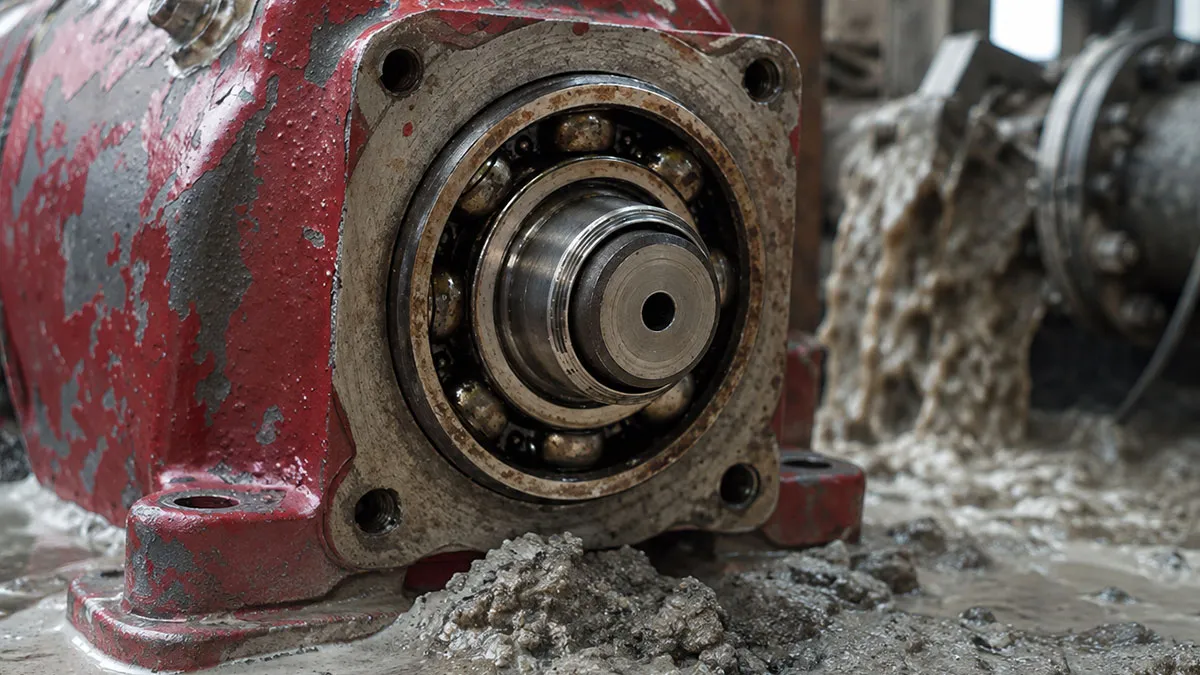
Rags, wipes, hair, and stringy fibers can wrap around exposed rotating features or collect in spring and drive areas. Fats, grease, biological solids, and polymer can create sticky deposits that restrict axial movement. A face-material upgrade does not correct immobilized flexible elements.
Review upstream screening, pump anti-clog performance, seal architecture, exposed geometry, chamber circulation, cleaning access, and the shutdown interval together.
Variable Solids Content: Designing for the Worst Day, Not the Average Day
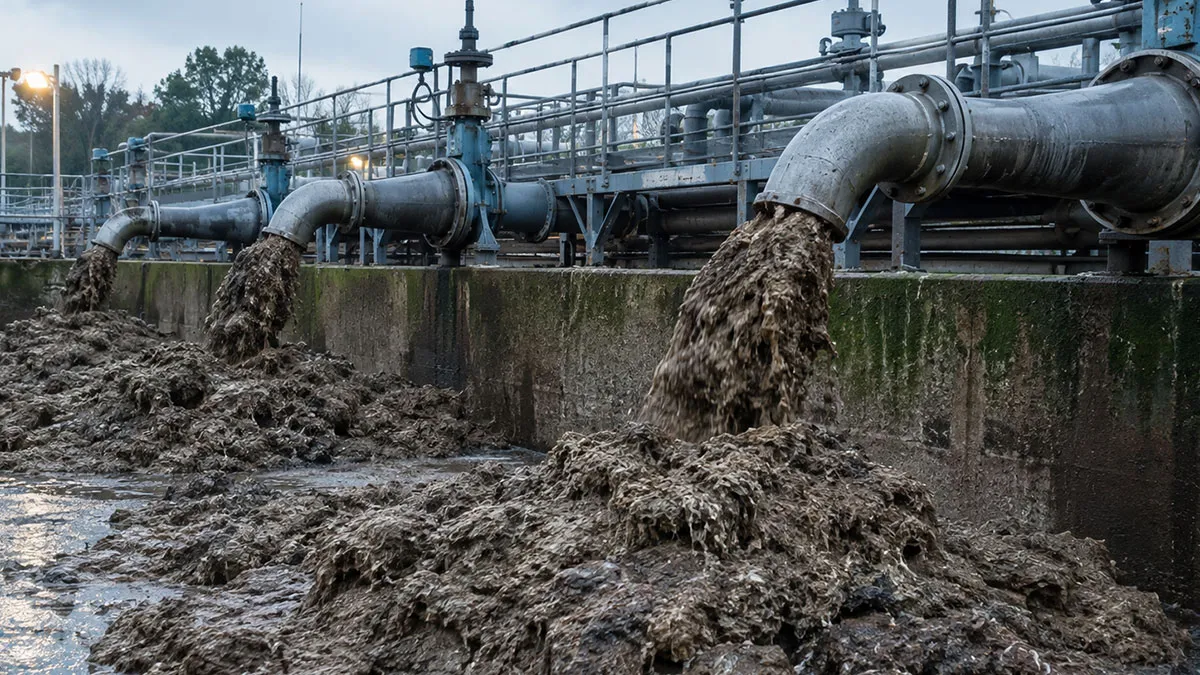
Municipal and industrial wastewater streams vary-by time of day, by weather (stormwater intrusion), by upstream industrial discharge events
- far more than a controlled process slurry does. A seal and flush plan
sized for average conditions can be badly under-protected during a peak grit or high-solids event, and it’s often those peak events, not the average day, that actually damage the seal. This is a strong argument for building in margin on flush capacity and restriction bushing design rather than specifying tightly to typical operating data alone.
Sludge Pumps: Higher Solids, Different Chemistry
Sludge adds rheology, gas, polymer, biological activity, variable dewatering chemicals, and industrial contributors. Obtain representative chemistry across seasons and process changes. Check elastomers, face grades, binders, metallurgy, coatings, and barrier or flush compatibility with both process and cleaning fluids.

What to Check First When a Wastewater Seal Fails Early
1. Is the damage on the faces, or around the springs/dynamic O-ring? Face wear points to abrasion; packing or hang-up around moving components points to ragging or solids packing-see our seal face diagnosis guide for how to tell these apart from photos.
2. Does the flush plan and restriction bushing account for peak grit events, or just typical flow? Under-sizing for the worst day rather than the average day is a common and fixable gap.
3. Is the seal chamber geometry actively discouraging fibrous buildup, or is it a design that’s known to be ragging-prone in this specific service?
4. Has process chemistry been reviewed for elastomer and face material compatibility, particularly in sludge and digester-adjacent applications where pH and temperature swings are common?
Engineering Pros-and-Cons Framework
Use this matrix during failure review, design approval, and bid leveling. It exposes the trade-offs that a seal price or generic material name can hide.
| Observed problem | Likely mechanism | System response to evaluate |
|---|---|---|
| Grit scoring | Hard particles at face track | Solids-tolerant seal, face pair, chamber flow, grit removal |
| Ragging / wrapped fibers | External interference or packed flexible elements | Open architecture, upstream screening, access and cleaning |
| Grease / biological deposits | Hang-up, poor cooling, blocked passages | Temperature, cleaning plan, material and chamber design |
| Frequent starts / low wet well | Dry contact, heat, air ingestion | Level logic, permissives, quench/support, minimum runtime |
What to Send for an Application Review or Quote
- Facility and pump tag/model, wet well or process location, pump orientation, chamber/shaft dimensions, speed, duty points, controls and redundancy
- Stream characterization: grit PSD/hardness, rags/wipes/fibers, grease, biological solids, sludge type, polymer, industrial contributors, pH, chlorides, temperature and cleaners
- Operating history: starts/hour, minimum level/submergence, standby duration, dry-run/cavitation alarms, clog events, washdown, bypass and seasonal peaks
- Current seal, materials and support plan; failure photos, deposits, runtime, leakage, motor/pump condition, vibration, runout, bearings and impeller clearance
- Worker exposure, pathogen/chemical controls, leakage containment, maintenance access, cleaning/decontamination, spares, commissioning and acceptance criteria
Frequently Asked Questions
Does wastewater service always need a hard/hard face pair?
Not automatically. Grit severity, lubrication, chemistry, speed, design, and support conditions determine the pairing.
Can a seal prevent pump ragging?
No. Seal architecture can reduce local hang-up, but upstream screening, pump hydraulics, wet-well management, and cleaning remain important.
Why do failures cluster after low-level events?
Air ingestion, poor lubrication, heat, and rapid cycling can damage faces or secondary seals.
Should bleach or other cleaning chemicals be included in selection?
Yes. Intermittent cleaning exposure can control elastomer and metallurgy compatibility.
What is the best first diagnostic sample?
Preserve the failed seal and deposits, then compare them with wet-well events and control trends.
Related HydroMax Seal Resources
- slurry seals
- pump seals
- seal repair and refurbishing
- seal performance services
- application engineering support
Request a Project-Specific Seal Recommendation
Send HydroMax the pump and seal identification, dimensional information, operating envelope, slurry solids and chemistry, current seal arrangement and materials, support-system details, failure evidence, delivery requirement, and approval criteria. The team can review whether the practical next step is a new slurry seal, an equipment-specific alternative, a support-system change, a repair assessment, or a verified cross-reference.
Request an Application Review and Quote or email sales@hydromaxseal.com.