
EMD-31 Teflon Bellows Seal for Corrosive Applications
EMD-31 Teflon Bellows Seal for Corrosive Applications
Overview
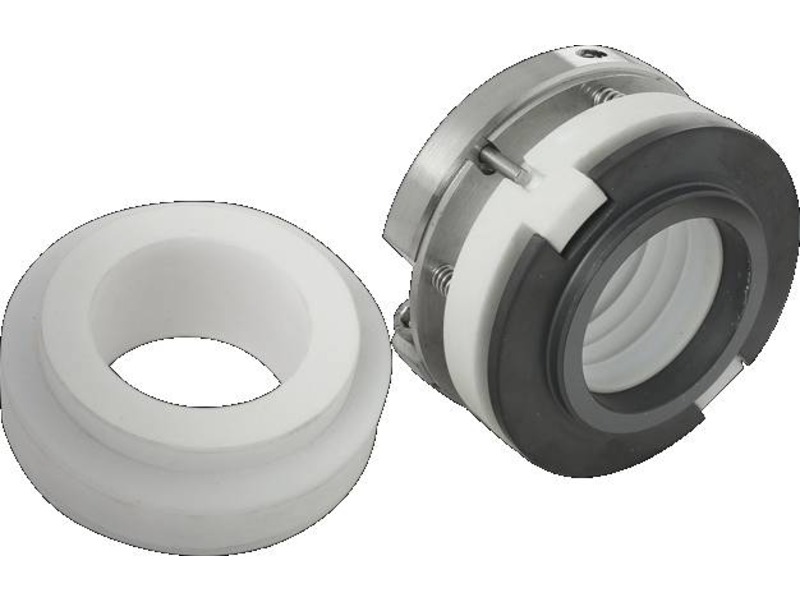
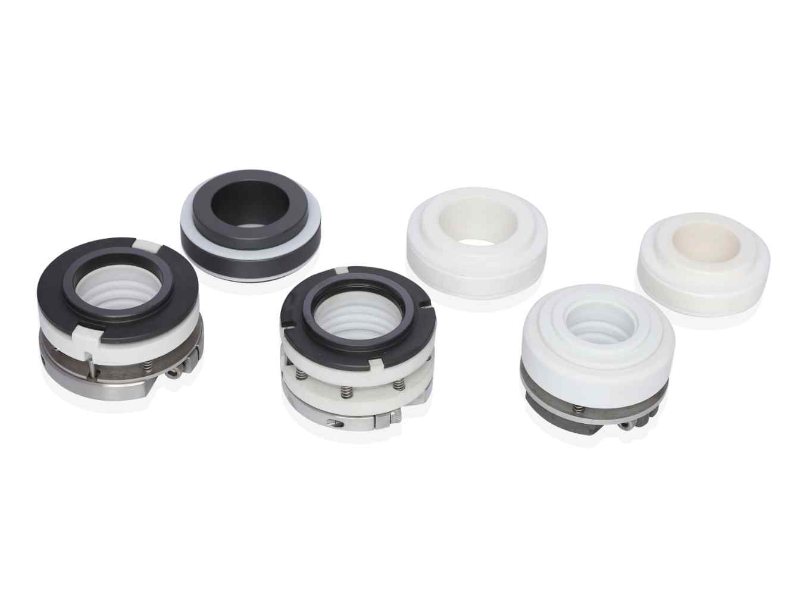
The EMD-31 is a MULTI-SPRING, TEFLON BELLOWS (2 SLOT DESIGN) COMPONENT SEAL.
External Seal, Teflon Bellows, Parallel Shaft, Teflon clamped (No Elastomers), Multi-Spring & Collet Clamp Driven (Replaceable Bellows – 2 slots).
The seal has a number of design features including a monolithic seal face and is supplied with a stationary seat as standard.
Product Description
Technical Specifications
| Seal Shaft Sizes | 1.5″ – 5.5″ |
| Inboard Seal Face Combination | GFT/Cer, GFT/SiC |
| Bellows | Composite GFT (Glass Filled Teflon) |
| Pressures | Up to 5 barg (73 psig) – shaft size specific |
| Temperatures | Up to 110°C (230°F) |
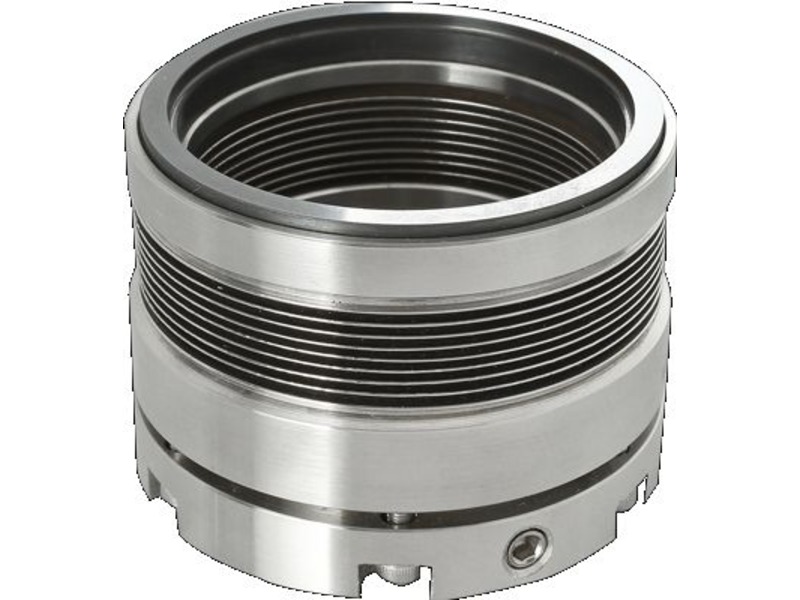
HydroMax Seal offers a wide range of rotary component metal bellows mechanical seals in a variety of seal faces, seal sizes, and design configurations.
Typical Applications & Industry Use Cases
The EMD-31 is a bellows-type mechanical seal featuring a Teflon (PTFE) bellows and balanced sealing faces — designed for highly aggressive, corrosive, or chemically challenging fluids where conventional elastomer-based seals may fail. The bellows construction provides chemical inertness, eliminates secondary sliding elastomer seals, and provides greater resistance to chemical attack and thermal/chemical cycling.
Industries Served

Chemical processing
pumps, mixers, reactors, and transfer systems handling strong acids, alkalis, aggressive solvents, or corrosive chemicals.

Petrochemical and refinery operations
transfer pumps, feed systems, and process streams involving aggressive hydrocarbons, solvents, or reactive fluids.

Pharmaceutical, biotech, food, and specialty-chemicals industries
especially where solvent resistance, chemical inertness, and seal integrity are required over long duty cycles.

Utility, wastewater, and industrial water treatment
pumps dealing with corrosive cleaning agents, chemical dosing, or continuous chemical exposure.
Equipment & Use-Case Scenarios
- Centrifugal or rotary pumps, agitators, or process equipment with shaft sizes and pump housings compatible with a bellows-type seal.
- Services where fluid composition includes aggressive chemicals, high corrosion potential, or fluctuating pH/solvent content — where PTFE’s chemical resistance ensures longer seal life.
- Processes where thermal and chemical cycles are frequent — PTFE bellows tolerate repeated temperature/chemical cycles better than elastomer bellows, reducing the risk of seal failure.
- Equipment requiring minimal maintenance and long service intervals under harsh conditions — bellows seals offer reliability where elastomer seals would degrade quickly.
Why It Fits These Applications
- The PTFE bellows provides excellent chemical resistance and compatibility with a broad spectrum of aggressive chemicals, solvents, acids, alkalis, and highly reactive fluids — protecting sealing surfaces and wetted parts against corrosion and chemical attack.
- Bellows-style design eliminates sliding elastomer secondary seals — removing a common failure point in corrosive or solvent-rich services where elastomers are incompatible or degrade rapidly.
- Balanced sealing faces and bellows compliance accommodate shaft movement, thermal expansion, and misalignment — ensuring stable sealing even under thermal/chemical cycling or harsh operating dynamics.
- Low-friction, inert PTFE construction reduces wear and maintenance requirements, delivering high reliability and long operational life in demanding chemical or corrosive environments.
Installation Guidelines
Before installation, thoroughly inspect the pump shaft, seal chamber bore or gland face, and all mating surfaces. Ensure they are clean and free of scoring, corrosion, pitting, or debris. Correct alignment and surface finish are essential for optimal bellows seal performance.
Carefully install the EMD-31 bellows seal assembly — avoid distorting or twisting the PTFE bellows. Ensure the rotary face and stationary seat are properly aligned, and that the bellows is relaxed (not overstressed) when the gland is tightened.
Confirm that the process fluid, temperature, pressure, and chemical compatibility align with the seal’s specification and with PTFE’s chemical resistance limits. Bellows seals are particularly suited for chemically aggressive or corrosive services, but must be installed under correct conditions.
After installation, perform a controlled startup — monitor for leaks, check for smooth shaft rotation, verify sealing integrity under low load, then ramp up to full operating conditions.
Maintenance & Inspection Best Practices
- Periodically inspect the bellows seal during scheduled shutdowns: check the bellows for any signs of deformation, cracks, chemical attack, or fatigue; examine the seal faces for wear, scoring, or damage; inspect gland faces and shaft surfaces for corrosion or pitting.
- Maintain a log of operating conditions: fluid chemistry (pH, solvent content), temperature, pressure, run hours, start-stop cycles, and any maintenance/inspection events. Use this log to track seal performance and predict maintenance intervals.
- Avoid dry running, extended operation with depleted fluid lubrication, or operation outside of specified chemical/temperature limits — such conditions accelerate wear or degrade the PTFE bellows.
- If fluid conditions change (e.g, more aggressive chemistry, higher temperature, contaminants), re-evaluate seal suitability; consider re-specification (different materials) or more frequent inspections.
Service & Support Options
- Pre-installation consultation: verify that process fluid, chemical compatibility, and operating conditions match the seal spec; determine the best face materials and elastomer (if any) for fluid service.
- Spare-parts supply: stock critical components — bellows assemblies, rotary/stationary faces, gland hardware — for quick replacement when maintenance is needed.
- Commissioning and start-up support: validate installation, alignment, and sealing performance under actual operating conditions (fluid chemistry, temperature, pressure, load).
- Preventive-maintenance program: regular inspection and condition-based maintenance schedule to detect early signs of wear or chemical degradation, plan replacements proactively, and avoid unplanned downtime.
- Upgrades or re-specification support: if process duties evolve (e.g., more aggressive chemicals, higher duty cycles, temperature/pressure changes), material and seal design review to ensure continued seal integrity and longevity.
Related Products
Contact HydroMax Seal
Contact HydroMax Seal today for innovative solutions, expert guidance, and over a century of engineering excellence. Your journey to mechanical sealing excellence starts with HydroMax Seal!
E-Mail: sales@hydromaxseal.com
Address: 18511 Beaumont Hwy Building D
Houston, TX
77049