
Metal Bellows Seal RBW-021 – Durable Axial & Angular Flexibility
Metal Bellows Seal RBW-021 – Durable Axial & Angular Flexibility
Overview
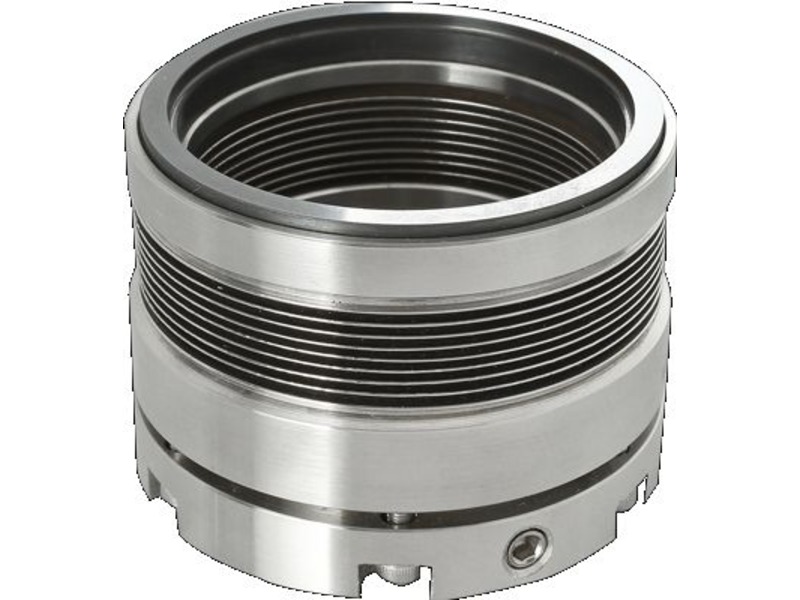
HydroMax Seal RBW-021 | Metal Bellows Balanced Seal with Graphite Wedge Packing
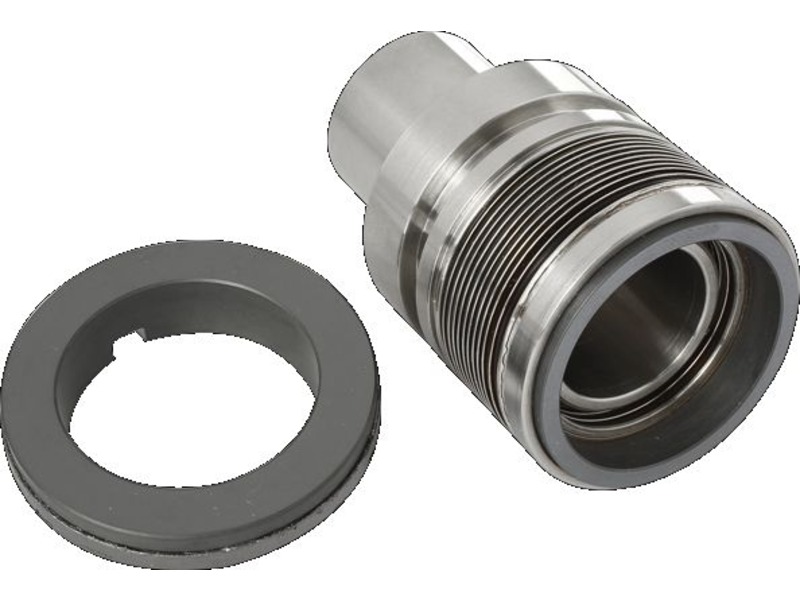
The RBW-021 is a metal bellows balanced mechanical seal designed for demanding internal sealing applications. It features graphite wedge packing as the secondary sealing element and is internally mounted using a set screw fixation to the shaft. The seal supports a wide range of metal bellows materials, meeting various chemical and thermal requirements.
This seal is suitable for high-speed, high-pressure operations and is available in multiple seal face combinations, including Carbon, Antimony Carbon, Tungsten Carbide, and Silicon Carbide.
Product Description
Design Features
- Balanced metal bellows design for pressure stability
- Graphite wedge packing for reliable high-temperature sealing
- Internally mounted and set screw secured
- Bellows are available in Stainless Steel, Alloy C276, AM350, Inconel 718
- Bellows ends available in Stainless, Alloy C4, Alloy C276, Inconel 625
- Compatible with chemically aggressive and thermally intensive environments
Technical Specifications
| Seal Shaft Sizes | 1.000″ – 4.000″ (25mm – 100mm) |
| Inboard Seal Face Combinations | Carbon Antimony Carbon Tungsten Carbide (TC) Silicon Carbide (SiC) |
| Secondary Sealing | Graphite Wedge |
| Shaft Speeds | Up to 25 m/s |
| Pressures | Up to 16 Barg (232 psig) – Shaft Size Specific |
HydroMax Seal RBW-021 provides robust and reliable sealing for critical process conditions that require high-performance materials and balanced design integrity.
Typical Applications & Industry Use Cases
The RBW-021 Metal Bellows Mechanical Seal is a robust, internal wet seal featuring a metal bellows element that provides spring loading without traditional coil springs. This design improves reliability and performance in challenging services where elastomer compression springs may be susceptible to wear or chemical attack. The metal bellows flexes to accommodate shaft movement while maintaining consistent face contact, making the RBW-021 suitable for a wide range of industrial pumping applications.
Industries Served

Chemical processing and corrosive fluid services

Petrochemical and refining operations

Water and wastewater treatment

Industrial process pumping

Power generation

Specialty and high-purity applications
Equipment & Use-Case Scenarios
- Parallel-shaft centrifugal and process pumps requiring internal wet sealing
- Services with aggressive or challenging liquids where traditional spring seals may degrade
- Applications needing extended seal life and reduced maintenance
- Environments where temperature or fluid chemistry limits elastomer performance
Why It Fits These Applications
- Metal bellows design: Eliminates coil springs and reduces the number of elastomer-exposed components, improving chemical resistance and reliability
- Consistent face loading: Bellows provide uniform pressure across the seal faces throughout operating conditions
- Internal wet configuration: Uses the process fluid for lubrication and heat dissipation
- Enhanced durability: Metal bellows are resistant to fatigue and can handle a wide temperature range
- Reduced maintenance: Fewer moving parts and higher resistance to degradation extend service intervals
Installation Guidelines
Pre-Installation Preparation
Clean and thoroughly inspect the pump shaft, seal chamber bore, and gland surfaces. Remove corrosion, debris, and surface imperfections to ensure precise contact and alignment of sealing surfaces.
Seal Installation
Slide the RBW-021 seal onto the shaft and properly seat it in the seal chamber. Ensure the metal bellows are not compressed or distorted during installation, and confirm that the sealing faces and the stationary seat are aligned correctly within the gland or housing.
Orientation & Fit
Verify that the seal orientation aligns with the shaft rotation and fluid flow directions required by your service.
Startup Procedure
After installation, bring the pump up to operating speed and pressure gradually. Monitor around the seal area for any signs of leakage, vibration, or abnormal temperature before placing the equipment into full duty.
Maintenance & Inspection Best Practices
- Routine Visual Checks: Inspect for leakage, vibration, or elevated temperatures at the seal area
- Seal Face Inspection: During scheduled maintenance, check seal faces for wear, scoring, or deposits
- Metal Bellows Integrity: Assess bellows for signs of fatigue, deformation, or cracks
- Operating Logs: Track key operating parameters such as pressure, temperature, and speed to support data-driven maintenance decisions
- Spare Parts Inventory: Maintain replacement stationary seats, bellows elements, and seal faces to minimize downtime
Service & Support Options
- Application Review: Confirm that the metal bellows and face materials selected are compatible with your fluid chemistry, temperature, and pressure conditions
- Installation Assistance: Guidance to help ensure secure seating and correct orientation
- Preventive Maintenance Planning: Establish inspection and replacement intervals based on operating history and service severity
- Upgrade Guidance: If operating demands increase (higher temperatures, pressures, or more aggressive fluids), evaluate alternate materials or enhanced designs to sustain performance
Related Products
Contact HydroMax Seal
Contact HydroMax Seal today for innovative solutions, expert guidance, and over a century of engineering excellence. Your journey to mechanical sealing excellence starts with HydroMax Seal!
E-Mail: sales@hydromaxseal.com
Address: 18511 Beaumont Hwy Building D
Houston, TX
77049