

A circuit-specific guide for reliability engineers, maintenance teams, project engineers, and procurement.
Mining slurry seal selection must be circuit-specific. Tailings, concentrate, and grinding-circuit pumps can differ in particle size and hardness, density, chemistry, pressure, entrained air, upset behavior, and downtime consequence. Define the actual duty and failure history before choosing single versus dual, flushless versus flushed, face materials, elastomers, metallurgy, and support systems.
| KEY TAKEAWAY |
| Build the datasheet around normal and upset cases. Include mineralogy and particle distribution, not only percent solids. Document water availability and quality, startup/shutdown logic, gland/chamber geometry, pump condition, operating strategy, and the site’s maintainability limits. |
Practical Engineering Perspective
In mining reviews, the average process sheet is rarely enough. Mill events, cyclone changes, density swings, tramp material, water-pressure dips, and pump wear can move the seal outside the expected envelope. Procurement should ask how the proposed design handles those transitions and how operators will detect them.
This article reflects HydroMax Seal’s published product and service categories plus established mechanical-seal engineering practice. It does not claim that every duty has been field-tested or that any configuration guarantees a specific runtime. For a high-consequence or unfamiliar application, use verified equipment data, representative process information, technical approval, and written acceptance criteria before procurement.
Why Mining Slurry Is Its Own Category
Ore and mineral slurries aren’t one thing. A grinding or mill circuit pump might handle coarse, high-density rock particles at high solids loading, with large-particle impact and cyclic pressure pulses as the dominant threat to seal faces. A tailings line further downstream typically carries finer particles, still abrasive but with the wear mechanism shifting from impact toward continuous micro-abrasion. A flotation circuit or concentrate transfer pump adds a chemistry dimension on top of the abrasion-residual flotation reagents, elevated or swinging pH depending on the circuit, sometimes cyanide in leach applications. Specifying one seal design across all of these because “it’s all slurry” is a common and expensive mistake.
Why Packing and Expellers Fall Short on Critical Mining Pumps
Packing, expellers, and mechanical seals each have legitimate mining applications. Packing can be familiar and tolerant but consumes gland water and requires adjustment. Dynamic expellers can reduce sealing pressure while the pump runs but may need static sealing when stopped and consume power. Mechanical seals can reduce visible leakage and water use, but demand correct application, pump condition, and support.
Compare alternatives by total water, energy, maintenance exposure, leakage control, parts, downtime, and operating envelope—not by declaring one technology universally superior.
Grinding and Mill Circuit Pumps: Impact Is the Enemy
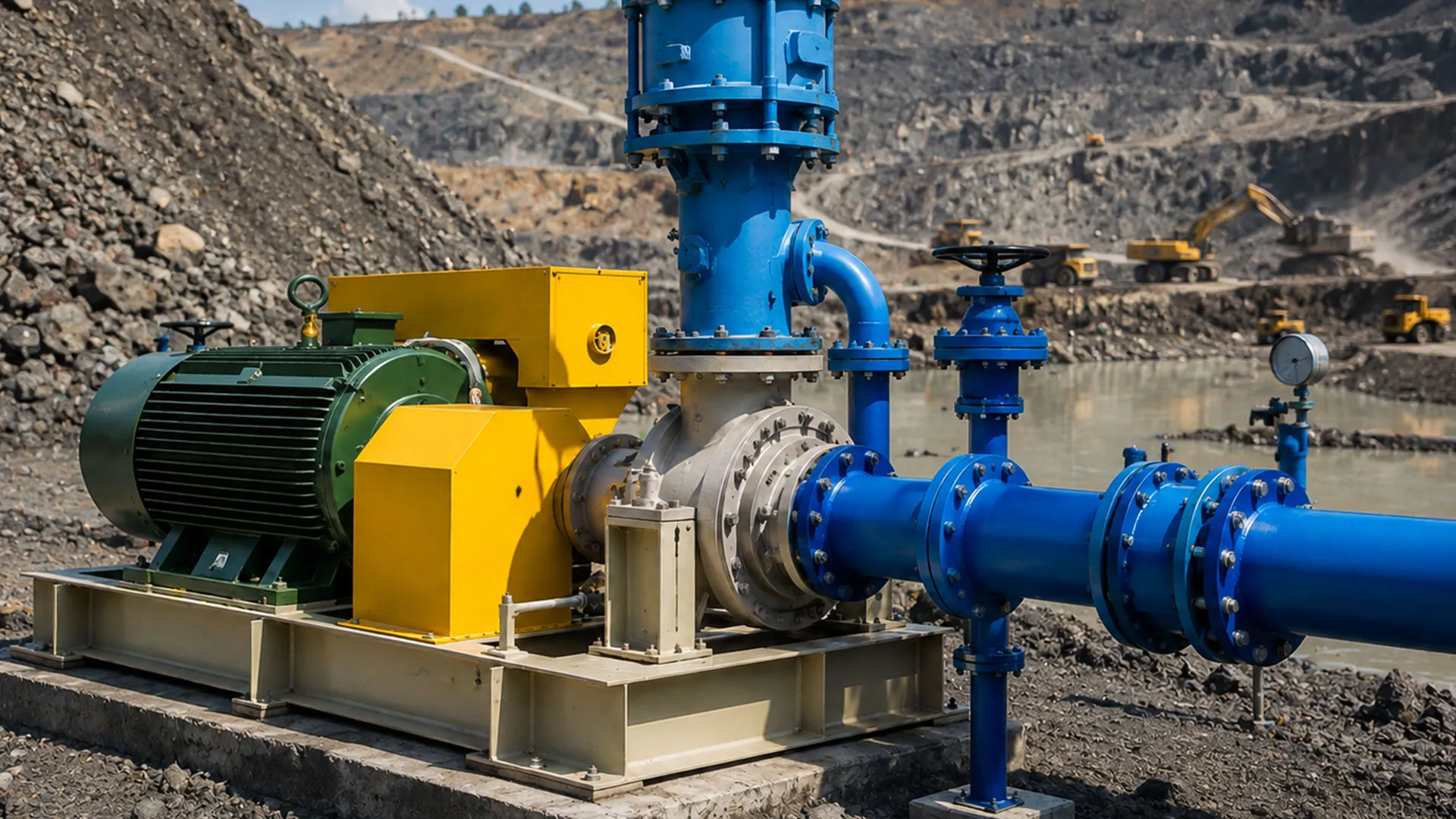
Coarse, high-density ore slurry moving at high solids concentration through grinding and mill circuit pumps subjects seal faces to large-particle impact loading and cyclic pressure pulses rather than steady, fine abrasion. In this duty, seal face toughness matters more than raw hardness-a tungsten carbide face, with its superior fracture toughness, may be favored over a more brittle silicon carbide face here, because the failure mode to guard against is cracking and chipping from impact events, not gradual wear. A single mechanical seal with a well-engineered Plan 32 external flush is standard where a reliable clean water source is available; where flush reliability or zero-leakage requirements are stricter, a dual arrangement is worth the added cost.
Tailings Pumps: High Solids, High Pressure, Long Runtime Expectations
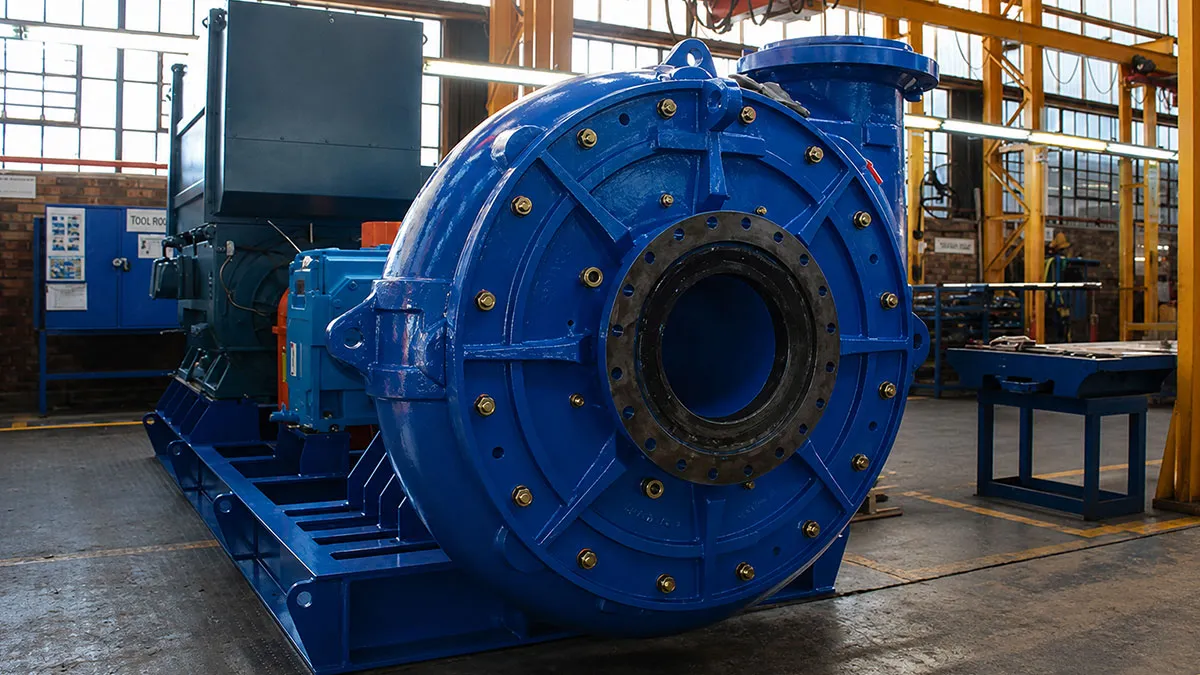
Tailings lines run continuously, often at high solids concentration and pipeline pressure, over long distances. The reliability bar is high because tailings pumps are rarely a redundant, easily-swapped asset – unplanned downtime here tends to be expensive. Fine-to-moderate particle abrasion is typically the dominant wear mechanism rather than large-particle impact, which shifts the face material calculus toward silicon carbide’s strengths in continuous, lower-shock-load duty – though seasonal pH swings in some tailings streams (particularly from oxidized sulfide ore) can make chemical resistance as important as abrasion resistance in face material selection.
Concentrate and Flotation Circuit Pumps: Chemistry Meets Abrasion
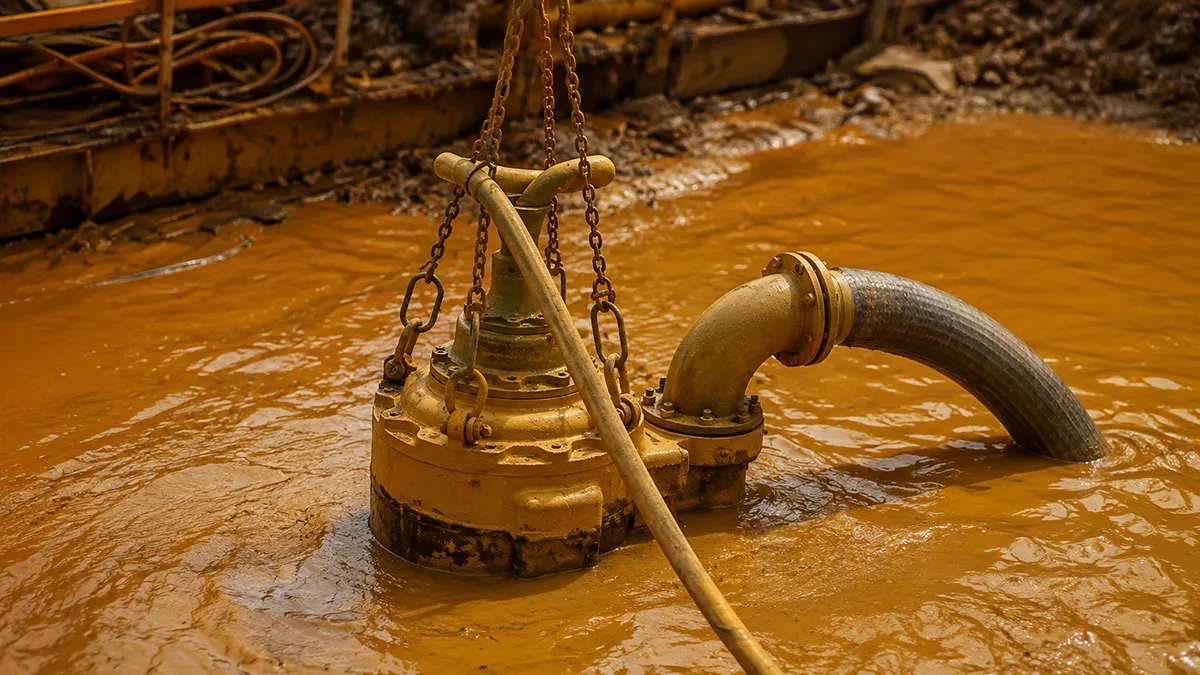
Concentrate transfer, conditioning tank feed, and flotation circuit pumps add process chemistry to the abrasion problem. Residual flotation reagents and elevated pH are common, and this is where the distinction between silicon carbide grades genuinely matters: reaction-bonded silicon carbide’s residual free silicon content can degrade under strongly alkaline conditions in ways that look like abrasive wear but are actually chemical dissolution of the face material-while solid sintered silicon carbide holds up far better in that same chemistry. Getting this distinction right in the initial specification avoids a face material that fails from chemistry while everyone assumes it’s failing from abrasion.
What Actually Moves the Needle on Mining Slurry Seal Reliability
Reliability improves when the pump and sealing system are treated together: correct chamber geometry, controlled shaft runout and axial movement, stable operation near the intended hydraulic region, compatible materials, solids-tolerant architecture, reliable support fluids, monitored pressure/temperature/flow, and disciplined startup/shutdown.
Use a controlled trial with a baseline and signed acceptance criteria before projecting sitewide savings.
Engineering Pros-and-Cons Framework
Use this matrix during failure review, design approval, and bid leveling. It exposes the trade-offs that a seal price or generic material name can hide.
| Circuit / condition | Dominant seal risk | Design-review emphasis |
|---|---|---|
| Grinding / mill circuit | Coarse hard particles, impact, density swings, cavitation/upsets | Open architecture, toughness, pump condition, transient cases |
| Tailings transfer | High solids, long runtime, pressure and water use | Wear resistance, support reliability, monitoring, lifecycle cost |
| Concentrate / flotation | Fine abrasive solids plus reagents and corrosion | Full chemistry, elastomers, binders, metallurgy and contamination limits |
| Sump / intermittent duty | Settling, dry starts, ragging and variable submergence | Startup permissives, quench/flush, chamber cleaning and standby plan |
What to Send for an Application Review or Quote
- Circuit name and PFD/P&ID; pump tag/model/curve, seal chamber, shaft size, speed, pressure/temperature cases, elevation and duty cycle
- Mineralogy, PSD, particle hardness/shape, percent solids basis, slurry density, viscosity/rheology, entrained air, tramp material and variability
- Water and chemistry: pH, chlorides, reagents, flotation chemicals, dissolved species, temperature, flush/barrier quality and contamination constraints
- Current seal/packing/expeller arrangement, materials, support system, runtime, failure modes, leakage, water consumption, maintenance hours and pump-condition findings
- Criticality, outage cost, environmental/safety requirements, spare philosophy, operator coverage, instrumentation, acceptance test, commissioning and review interval
Frequently Asked Questions
Is one slurry seal design suitable across an entire mine?
Usually not. Circuit conditions and consequences differ.
Should percent solids drive selection?
It is important but insufficient. PSD, mineralogy, particle shape, density, chemistry, pressure, speed, and transients also matter.
Are flushless seals always best where water is scarce?
They can reduce water demand when the selected design fits the duty. Verify operating limits and dry-running/standby behavior.
When is a dual pressurized seal justified?
When isolation, chemistry, poor lubricity, leakage consequence, or severe exposure outweigh support-system complexity.
What should a mine trial measure?
Runtime and leakage plus water use, temperatures/pressures, maintenance hours, pump condition, operating events, parts consumption, and agreed failure criteria.
Request a Project-Specific Seal Recommendation
Send HydroMax the pump and seal identification, dimensional information, operating envelope, slurry solids and chemistry, current seal arrangement and materials, support-system details, failure evidence, delivery requirement, and approval criteria. The team can review whether the practical next step is a new slurry seal, an equipment-specific alternative, a support-system change, a repair assessment, or a verified cross-reference.
Request an Application Review and Quote or email sales@hydromaxseal.com.