
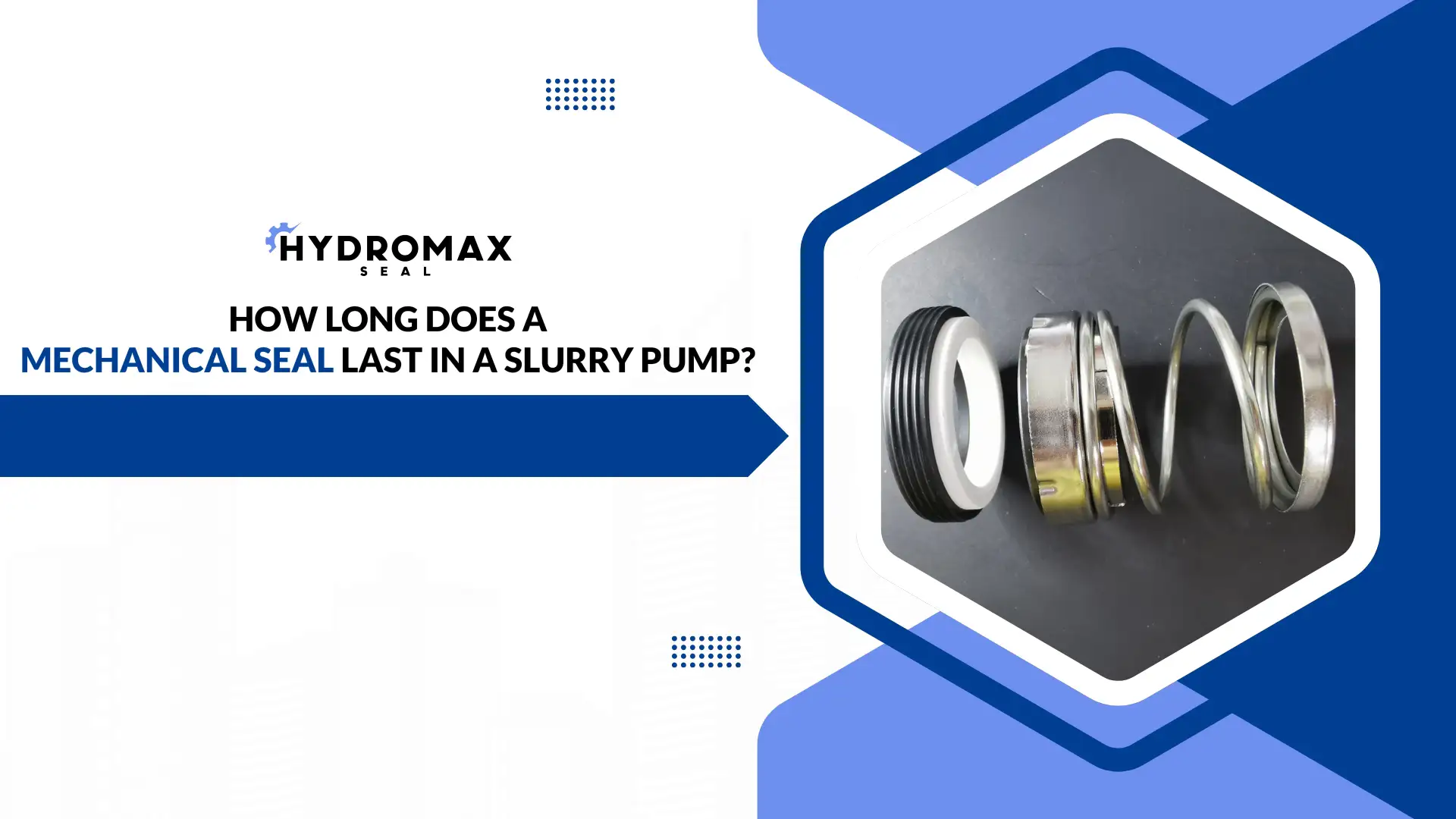

A mechanical seal in a slurry pump typically lasts 3 to 12 months, but actual seal life depends heavily on operating conditions, material choice, lubrication, cooling, installation quality, and maintenance. In abrasive slurry applications, mechanical seals wear faster because solids, heat, pressure fluctuations, and contamination all put stress on the sealing surfaces.
If these factors are not managed well, seal failure happens quickly and leads to leakage, unplanned downtime, and more frequent seal replacement. That is why the better question is not just how long a mechanical seal lasts. The better question is what causes seal life to shorten in slurry pump systems and what can be done to extend it.
In this article, you will learn what affects mechanical seal lifespan in slurry pump applications and how better material selection, lubrication control, cooling, installation, and maintenance can improve reliability.
What Determines Mechanical Seal Lifespan
Mechanical seal lifespan in slurry pump applications depends on how well a few core variables are controlled. In abrasive environments, even small changes in operating conditions or setup can shorten seal life quickly. When these variables are managed properly, seal reliability improves, and maintenance becomes more predictable.
Operating Conditions and Their Impact
Operating conditions have a direct effect on seal life. It is exposed to solids, friction, heat, and pressure changes that make the sealing environment much harsher than a standard clean-liquid application.
The biggest operating factors include:
- Pressure: High or fluctuating pressure increases the load on seal faces and accelerates wear
- Temperature: Excess heat breaks down lubrication and speeds up seal material degradation
- Slurry concentration: Higher solids content increases abrasion and damages sealing surfaces faster
Unstable conditions make everything worse. When pressure or temperature shifts frequently, the seal has a harder time maintaining a stable lubrication film. That leads to dry running, higher friction, more heat, and earlier seal failure. Keeping operating conditions steady is one of the most effective ways to extend mechanical seal lifespan in slurry pump service.
Seal Materials and Material Degradation
Seal materials play a major role in how long a mechanical seal lasts. In slurry pump applications, standard seal materials often wear out quickly if they are not suited for abrasive or corrosive environments.
Common seal material options include:
- Silicon carbide for strong abrasion resistance
- Tungsten carbide for durability under heavy load
- Carbon faces for balanced performance in moderate conditions
- Elastomers selected for chemical compatibility
Over time, these materials degrade because of:
- Abrasion: Solid particles scratch and wear down seal faces
- Chemical exposure: Corrosive fluids weaken materials and reduce strength
- Thermal stress: Repeated heating and cooling cycles cause material fatigue
If the wrong material combination is used, seal life drops significantly. Choosing the right seal materials based on slurry concentration, chemical exposure, temperature, and pressure helps reduce wear and delay seal replacement.
Installation and Alignment Factors
Even the best mechanical seal will fail early if installation is not done correctly. Improper installation is one of the most common causes of seal failure in slurry pump systems.
Typical installation problems include :
- misalignment between the pump shaft and seal faces
- incorrect setting of seal components
- damage during handling or assembly
These issues create uneven contact between seal faces. That leads to localized wear, heat buildup, vibration, leakage, and shorter seal life.
Correct alignment and setup improve seal performance by:
- maintain even contact across seal faces
- supporting proper lubrication between the sealing surfaces
- reducing vibration and mechanical stress
Following recommended installation procedures and checking alignment during maintenance can significantly improve mechanical seal lifespan and reduce unexpected failures.
How Mechanical Seals Work in High-Solids Slurry Pump Environments
Basic Working Principle of a Mechanical Seal
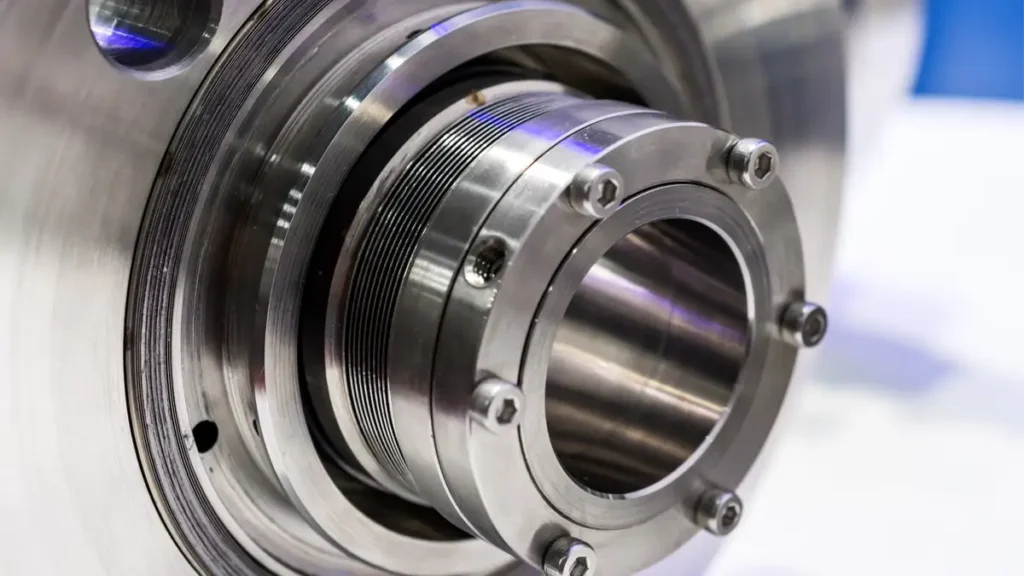
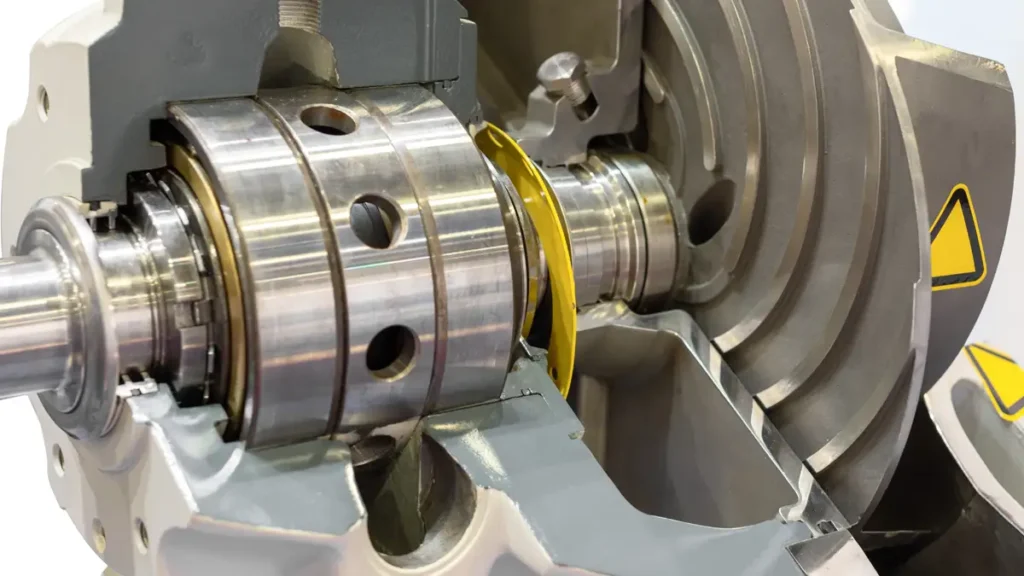
A mechanical seal prevents leakage by keeping two flat surfaces, called seal faces, pressed together. One face rotates with the shaft, while the other remains stationary. This setup creates a controlled sealing point that keeps slurry inside the pump.
A thin lubrication film forms between these faces during operation. That film is critical. It reduces friction, controls heat, and limits direct surface contact. When lubrication stays stable, the seal materials last longer,r and the seal performs more reliably.
If the lubrication film breaks down, the seal faces come into direct contact. Friction rises quickly, heat builds, seal surfaces wear faster, and failure follows.
Why Slurry Applications Are Harder on Seals
Slurry pump systems are much harder on mechanical seals than clean-fluid systems because solids constantly interfere with the sealing interface.
Abrasive Particle Interaction
Slurry carries solid particles that pass through the seal environment during operation. Some of these particles become trapped between the seal faces, where they scratch and damage the sealing surfaces. Over time, this abrasion wears down the faces and makes it harder to maintain a tight and reliable seal.
Lubrication Film Disruption
In ideal operating conditions, a stable lubrication film separates the seal faces. In slurry pump systems, solids can disrupt that film and make it unstable. When that happens, direct face contact increases, friction rises, and wear accelerates.
Increased Friction and Heat
Abrasive particles and poor lubrication create more friction at the sealing interface. As friction increases, so does temperature. Excess heat weakens seal materials, affects elastomer performance, and speeds up seal material degradation.
Faster Wear Than Clean Fluid Service
Mechanical seals handling clean liquids usually experience lower wear and more stable lubrication. In slurry applications, seals face continuous abrasion, contamination, pressure changes, and heat. That’s why mechanical seal lifespan is usually much shorter in slurry pump systems than in standard pumping service.
How Lubrication, Cooling, and Contamination Affect Seal Life
In slurry pump systems, seal life depends heavily on how well lubrication, temperature, and contamination are controlled. These three factors are tightly connected. If one starts to fail, the others usually follow.
Proper Lubrication
Lubrication is what allows a mechanical seal to operate without excessive wear. A thin fluid film between the seal faces prevents direct contact and helps control both friction and temperature.
When lubrication is stable, it provides:
- lower friction between seal faces
- reduced heat buildup
- sower seal material degradation
Problems start when this film breaks down. Dry running is one of the most common causes of seal failure in slurry pump applications. Without proper lubrication, the seal faces rub directly against each other, causing a rapid rise in temperature, surface damage, and early failure.
Cooling and Heat Control
Temperature control is essential to mechanical seal performance. As friction increases, heat builds up at the sealing interface. If this heat is not controlled, it weakens seal materials, destabilizes lubrication, and increases the chance of seal failure.
Effective cooling methods can include:
- external flush systems that supply clean fluid to the seal faces
- recirculation systems that help remove excess heat
- barrier or buffer fluid systems are used in more demanding conditions
Proper cooling helps maintain stable operating conditions, protecting the lubrication film and preventing overheating. That makes cooling one of the key factors in extending seal life and improving reliability.
Contamination and Solids Ingress
Contamination is a constant issue in slurry environments. Solid particles can enter the sealing area and interfere with normal operation. Once they reach the seal interface, they can damage the seal faces and disrupt lubrication.
That often leads to:
- scratching and scoring of seal surfaces
- increased friction and uneven wear
- Leakage and earlier seal failure
To reduce contamination, focus on practical steps such as:
- using proper seal support systems to limit solids ingress
- maintaining clean flush fluids where applicable
- inspecting seals regularly as part of routine maintenance
Controlling contamination, along with proper lubrication and cooling, plays a major role in extending mechanical seal lifespan in slurry pump systems.
MTBF for Mechanical Seals in Slurry Pump Applications
What MTBF Means
MTBF, or Mean Time Between Failures, is a practical way to measure how long a mechanical seal operates before it fails. Instead of treating seal life as a fixed number, MTBF helps evaluate reliability under real operating conditions.
A higher MTBF usually means:
- fewer seal failures
- less frequent replacement
- more predictable pump operation
- lower downtime
A lower MTBF often points to problems such as poor lubrication, unstable operating conditions, incorrect seal materials, contamination, or improper installation.
Tracking MTBF over time helps reveal patterns in seal failure causes and makes it easier to improve maintenance practices and system setup.
Typical Mechanical Seal Lifespan Ranges
Mechanical seal lifespan in slurry pump systems varies widely depending on the application.
Typical ranges are:
- Moderate slurry conditions: about 6 to 12 months
- Severe slurry conditions: about 3 to 6 months
- Well-optimized systems with proper maintenance: sometimes more than 12 months
These ranges are shaped by factors such as:
- solid concentration and particle size
- pressure and temperature
- lubrication and cooling quality
- installation accuracy and shaft alignment
The harsher the environment, the shorter seal life tends to be. Controlled operating conditions and disciplined maintenance improve MTBF and help delay failure.
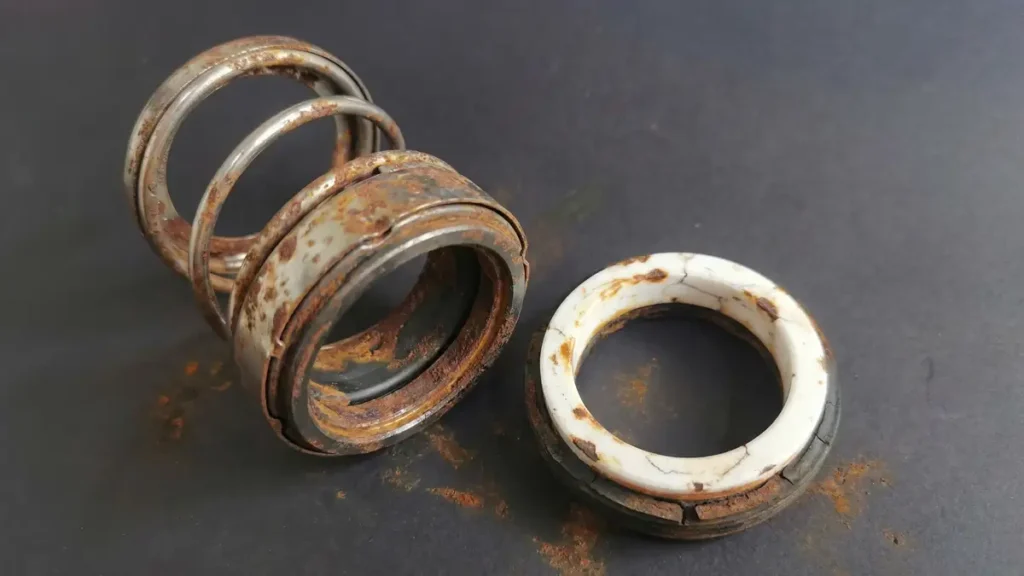
How to Extend Mechanical Seal Life in a Slurry Pump
If you want longer seal life, you need to manage causes instead of reacting to failures after they happen. Better seal performance usually comes down to a few practical habits.
Keep Operating Conditions Stable
Mechanical seals last longer when pressure, temperature, and slurry concentration stay within a controlled range. Frequent swings increase stress on the seal and make lubrication harder to maintain.
Choose the Right Seal Materials
Match seal face materials and elastomers to the actual slurry environment. Abrasive solids, corrosive chemicals, and thermal stress all affect material choice. Wrong materials shorten seal life quickly.
Improve Lubrication and Cooling
A stable lubrication film and effective cooling system reduce friction, control heat, and slow material degradation. If lubrication is poor, failure usually follows fast.
Prevent Contamination
Limit solids from reaching the seal interface whenever possible. Cleaner flush systems, proper support arrangements, and routine inspection all help reduce abrasive damage.
Focus on Correct Installation
Mechanical seals need proper alignment and correct setup. Even a strong seal design performs poorly if it is installed badly. Careful installation reduces uneven wear and helps the seal operate as intended.
Use Routine Maintenance to Catch Problems Early
Regular inspection helps identify wear before it becomes a failure. Monitoring leakage, vibration, heat, and performance trends can help teams plan maintenance instead of reacting to breakdowns.
Conclusion: Understanding and Extending Seal Life in Slurry Pumps
Mechanical seal lifespan in slurry pump systems depends on how well the core variables are managed. Operating conditions, seal materials, lubrication, cooling, contamination, alignment, and maintenance all work together to determine seal life. When any one of these factors is ignored, the risk of seal failure rises quickly.
Abrasive slurry environments make seal performance more demanding because solids, heat, and pressure changes all accelerate wear. That is why extending seal life is not about one magic product or one maintenance trick. It comes from controlling the full sealing environment.
If you want better reliability, longer seal life, and fewer unplanned shutdowns, the best approach is simple: keep conditions stable, use the right materials, maintain proper lubrication and cooling, install seals correctly, and inspect them before failure makes the decision for you.
Frequently Asked Questions About Slurry Pump Mechanical Seals
Why do slurry pump seals fail?
Slurry pump seals usually fail because abrasive particles damage the seal faces, lubrication breaks down, heat builds up, and operating conditions become unstable. Improper installation and weak maintenance practices also contribute to early seal failure.
How can seal life be extended?
Seal life can be extended by controlling pressure, temperature, and slurry concentration, choosing the right seal materials, improving lubrication and cooling, preventing contamination, and maintaining proper installation and alignment.
How long does a mechanical seal last in a slurry pump?
Mechanical seal lifespan varies by application. In moderate slurry conditions, seals may last 6 to 12 months. In severe slurry environments, seal life may drop to 3 to 6 months or less. Stable operating conditions and strong maintenance practices usually improve MTBF.
What role does lubrication play in seal performance?
Lubrication forms a thin film between the seal faces that reduces friction and heat. Without proper lubrication, direct contact occurs, wear increases quickly, and seal life drops sharply.
Do operating conditions affect seal life?
Yes. Pressure, temperature, slurry concentration, and operating stability all affect seal life. Fluctuations in these conditions increase stress on the seal and often lead to faster failure.
Are there standards for mechanical seals in slurry pumps?
MTBF means Mean Time Between Failures. It is a reliability measure that helps track how long a mechanical seal operates before failure. Higher MTBF usually means better seal performance and more effective maintenance practices.