

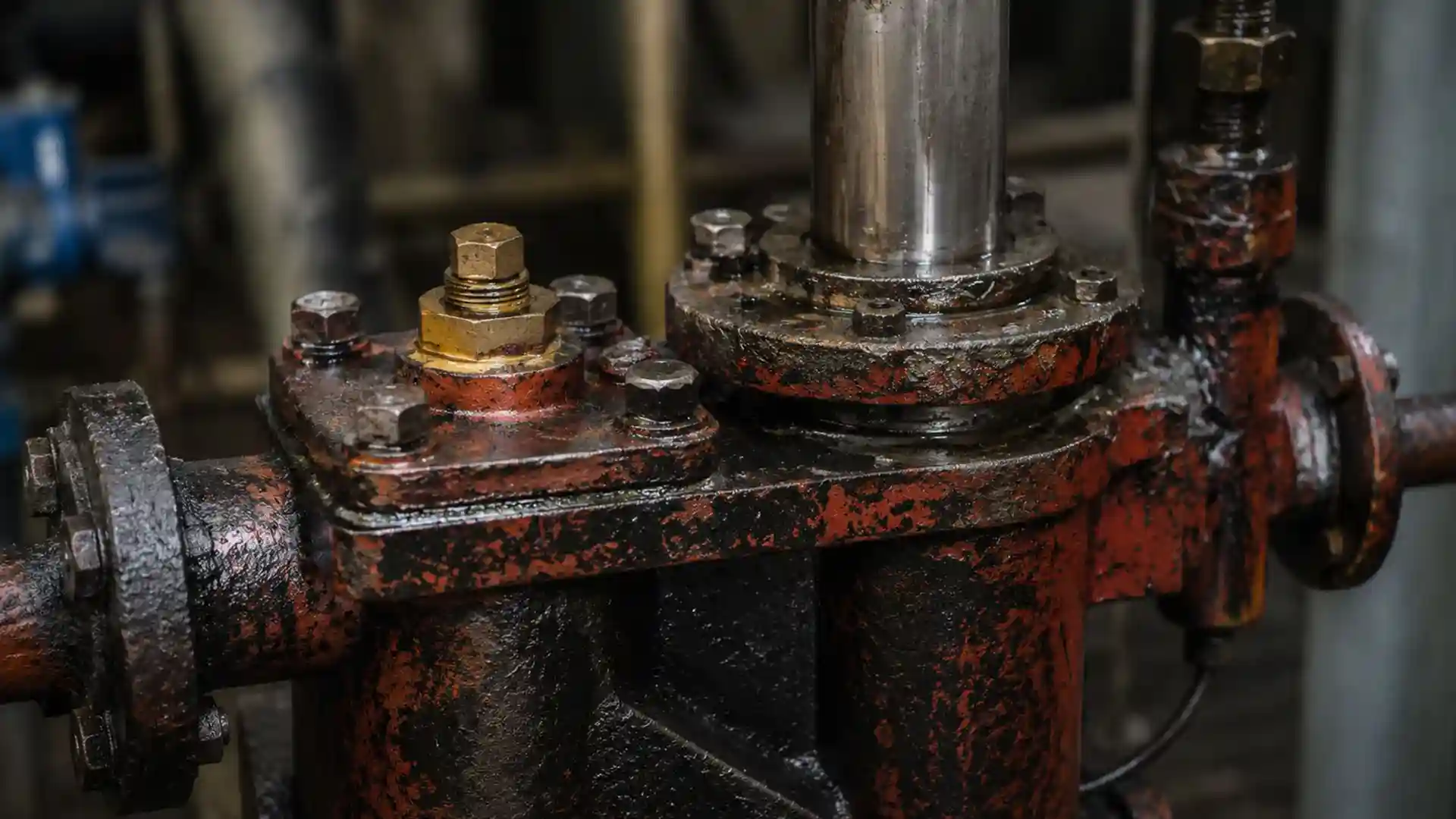

A disciplined inspection guide that turns a failed component into a testable root-cause hypothesis.
A failed face can narrow the cause, but it rarely proves root cause by itself. Scoring suggests hard-particle contact; heat checking or glazing suggests thermal distress or poor lubrication; pitting may reflect chemical attack, cavitation, or inclusions; an uneven track can indicate distortion, misalignment, runout, or movement. Confirm the pattern with the full assembly and operating data.
| KEY TAKEAWAY |
| Photograph before cleaning, label rotating and stationary components, preserve deposits, record face-track location and width, inspect the entire seal, and compare findings with the event timeline. Use microscopy, dimensional inspection, material identification, or chemistry analysis when consequence justifies it. |
Practical Engineering Perspective
In repair inspection, cleaning too early destroys clues. Deposits around springs, an elastomer wear line, discoloration near a hot spot, and the direction of face scoring can matter as much as the lapped surface. Preserve condition first; clean and measure second.
This article reflects HydroMax Seal’s published product and service categories plus established mechanical-seal engineering practice. It does not claim that every duty has been field-tested or that any configuration guarantees a specific runtime. For a high-consequence or unfamiliar application, use verified equipment data, representative process information, technical approval, and written acceptance criteria before procurement.
Why This Matters More in Slurry Service
In clean-fluid applications, seal failures are often traceable to a single obvious cause. In abrasive slurry service, several failure mechanisms can produce visually similar damage-pitting from cavitation can look a lot like pitting from chemical attack, and general face wear from straight abrasion can look similar to wear from a marginal lubrication condition. Getting the diagnosis right is the difference between a fix that actually extends the next seal’s life and a fix that just changes which failure mode kills the next seal instead.
Direct Abrasive Wear
What it looks like: A relatively even, matte, scored or lapped-looking wear pattern across the face, often with fine circumferential scratching visible under magnification. Wear tends to be broadly distributed rather than localized to one spot.
What it points to: Particles are reaching the interface consistently during normal operation-a flush or isolation problem (restriction bushing clearance, flush flow rate or reliability) more than a materials problem, unless the face material is clearly under-specified for the particle hardness and concentration involved.
Cavitation Erosion
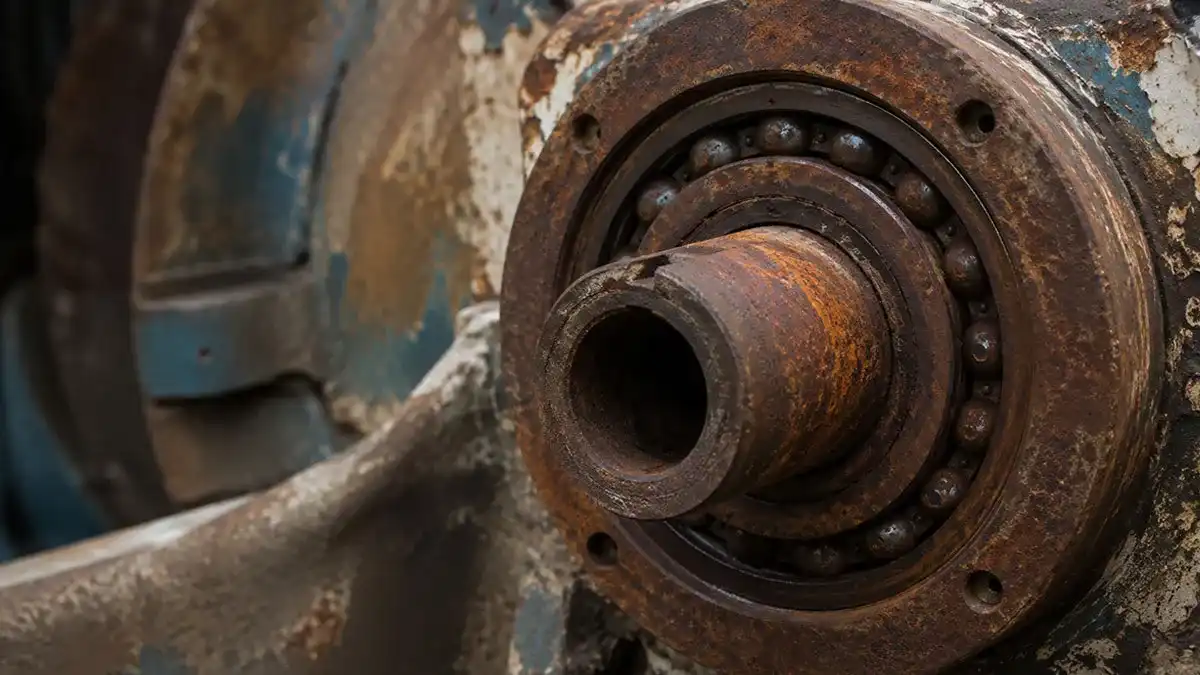
What it looks like: Localized pitting, often concentrated in a specific zone of the face rather than distributed evenly, sometimes with a rougher, sponge-like texture distinct from the smoother scoring of straight abrasion.
What it points to: Local pressure at the faces is dropping below the fluid’s vapor pressure, causing vapor bubbles to form and collapse violently right at the interface. This is a hydraulic/process condition
- pump suction conditions, seal chamber pressure, or NPSH margin-not a
seal specification issue, and swapping face material won’t fix it on its own.
Solids Packing and Hang-Up
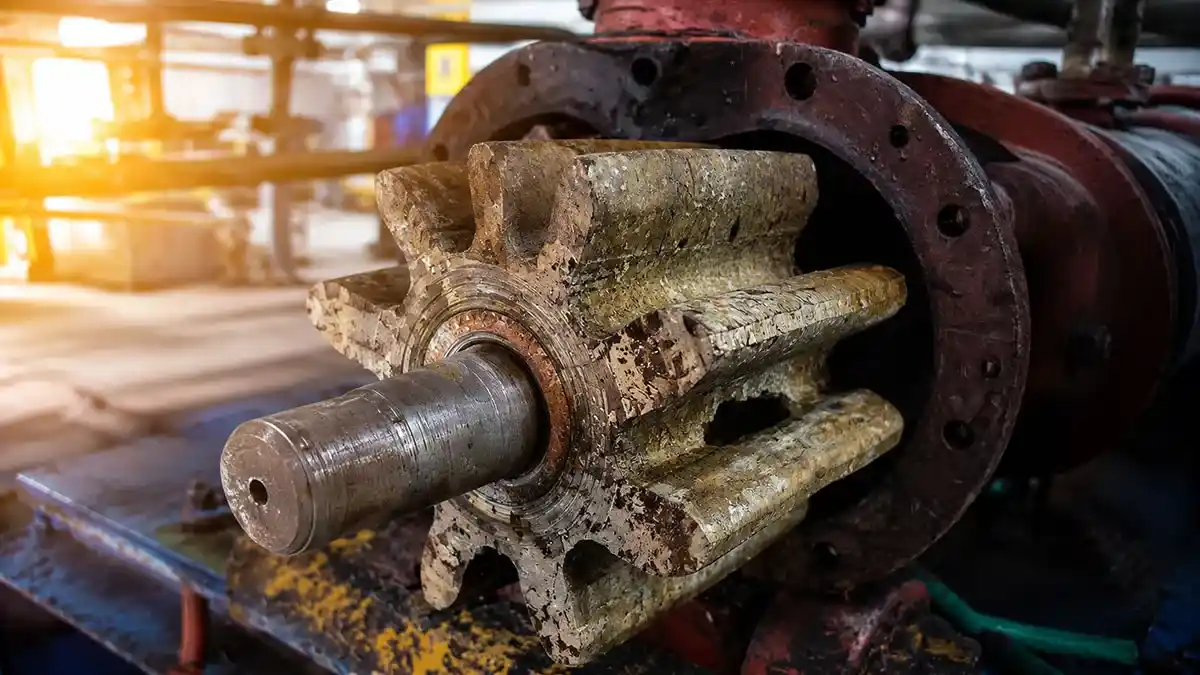
What it looks like: Damage or debris concentrated around the seal’s springs, drive mechanism, or dynamic O-ring rather than primarily on the faces themselves. The seal may show signs of having been unable to move freely along the shaft.
What it points to: Particles have accumulated in the moving components of the seal, preventing it from tracking shaft movement and thermal growth. This typically points to a seal chamber or geometry issue-inadequate flush turbulence to keep the chamber clear, or a seal design not well suited to the solids concentration involved-rather than a face material problem.
Chemical Attack
What it looks like: Can closely resemble straight abrasive wear or pitting, sometimes with a more matte, etched, or discolored appearance rather than the polished-then-scored look of mechanical abrasion. Elastomer components (O-rings, gaskets) degrading, swelling, or hardening alongside face damage is a strong indicator.
What it points to: The process chemistry-pH, temperature, specific chemical compounds in the slurry-is attacking the face material, binder phase, or elastomer independent of the abrasive content. This is a materials compatibility issue, and it calls for reviewing face material grade (for example, reaction-bonded vs. solid sintered silicon carbide) and elastomer selection against actual process chemistry, not a harder face.
Dry Running and Startup Damage
What it looks like: Damage concentrated at or shortly after startup rather than during steady running-heat-related discoloration, cracking, or scoring that appears disproportionate to the pump’s actual runtime hours.
What it points to: Solids settled and packed around the faces during a standstill period, and the seal encountered that packed material before adequate flush flow and lubrication were re-established at the next startup. This points toward standstill protection (a quench arrangement) rather than anything about steady-state operation.
Putting It Together: What to Send for a Failure Review
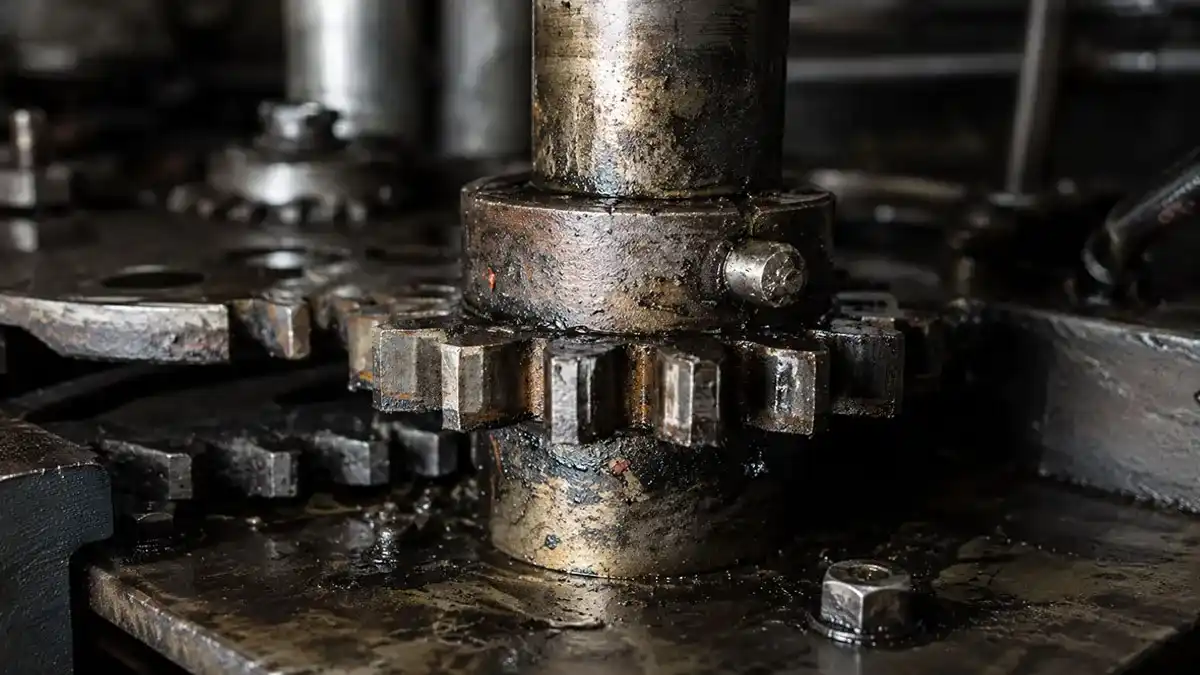
The fastest way to get an accurate diagnosis on a repeat failure is to send:
- Photos of both faces, in good lighting, before cleaning if possible
- The pump model, process fluid, and approximate solids concentration
and particle size if known
- Current seal arrangement and flush plan, if known
- How long the seal actually ran before failing, and whether failure
happened during steady operation or shortly after a startup
That combination-the physical evidence plus the operating context-is usually enough to separate the failure mechanisms above and point toward the actual fix, rather than a generic material upgrade that may or may not address what’s really happening.
Engineering Pros-and-Cons Framework
Use this matrix during failure review, design approval, and bid leveling. It exposes the trade-offs that a seal price or generic material name can hide.
| Damage pattern | Possible causes | Evidence needed to discriminate |
|---|---|---|
| Concentric grooves / scratches | Abrasives, debris, handling damage | Direction, embedded particles, flush history, particle analysis |
| Radial cracks / heat checking / glazing | Dry running, vaporization, excess load, poor heat removal | Temperature, startup, face load, cooling, chamber pressure |
| Pits / porous or receded surface | Chemical attack, cavitation, material defect | Chemistry, location, microscopy, material verification, pressure history |
| Tapered or partial wear track | Runout, misalignment, distortion, bearing or shaft movement | Flatness, runout, axial play, gland fit, pipe strain, vibration |
What to Send for an Application Review or Quote
- Uncleaned failed seal, paired faces, secondary seals, springs, metal parts, gland, sleeve, deposits and installed-orientation photos
- Chronology: installation, commissioning, first leak, alarm trends, trip, shutdown, restart, maintenance and observed process changes
- Pump and seal drawings, fits, torque records, shaft runout/endplay, vibration, alignment, bearing condition, pipe strain and seal chamber condition
- Pressure/temperature/speed/flow trends, flush or barrier readings, valve position, cooling, power loss, cavitation or dry-running events
- Laboratory plan if needed: deposit/particle identification, elastomer condition, metallurgy, hardness, face flatness/finish, microscopy and chemical analysis
Frequently Asked Questions
Can a photo identify root cause?
It can narrow the hypotheses, but reliable diagnosis usually needs the full assembly, dimensions, materials, and operating timeline.
Should the seal be cleaned before shipping it for analysis?
Usually no. Protect the faces and preserve deposits unless the receiving shop provides different instructions.
What does an uneven wear track mean?
It can indicate face distortion, misalignment, runout, axial movement, gland error, or pressure/thermal deformation.
Can chemical attack look like abrasion?
Yes. Surface recession and pits can be misread without chemistry and material verification.
What makes a failure report useful?
Clear evidence, ranked hypotheses, tests performed, root-cause confidence, repair disposition, corrective action, and a plan to verify the result.
Related HydroMax Seal Resources
- seal repair and refurbishing
- assembly and quality testing
- seal performance services
- precision engineering support
Request a Project-Specific Seal Recommendation
Send HydroMax the pump and seal identification, dimensional information, operating envelope, slurry solids and chemistry, current seal arrangement and materials, support-system details, failure evidence, delivery requirement, and approval criteria. The team can review whether the practical next step is a new slurry seal, an equipment-specific alternative, a support-system change, a repair assessment, or a verified cross-reference.
Request an Application Review and Quote or email sales@hydromaxseal.com.