

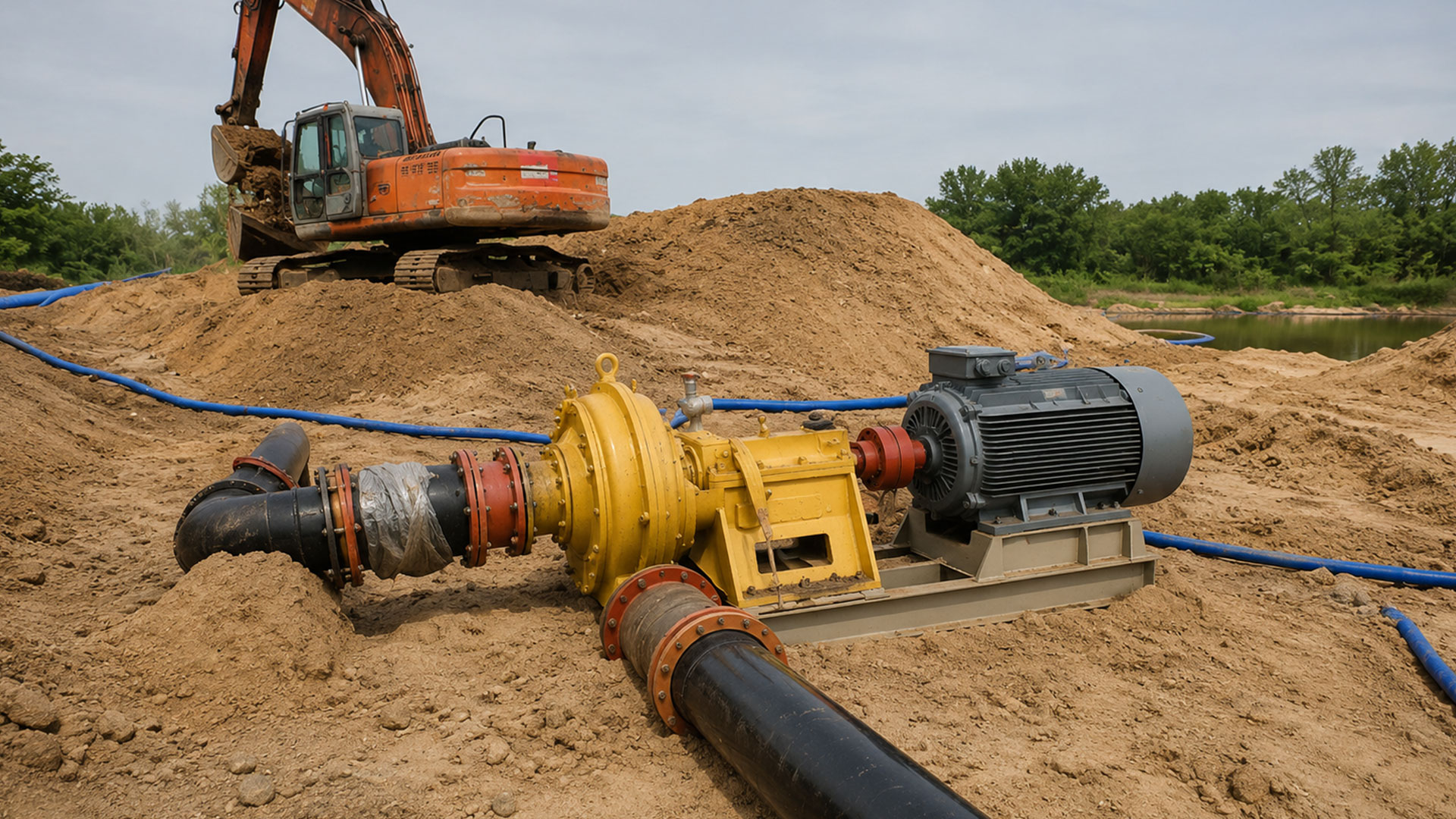

A field-practical selection guide for changing material, remote utilities, and severe startup conditions.
A dredge pump seal must tolerate variable solids, coarse sand or fine silt, changing suction conditions, pressure transients, vibration, and shutdown settling. Select the seal and support system from the worst credible dredging case—not only the average slurry concentration or the pump’s nominal duty.
| KEY TAKEAWAY |
| Map the entire operating cycle: prime or flood condition, startup, cutter or suction-head engagement, density changes, line clearing, shutdown, relocation, and restart. Define how flush, quench, or barrier protection continues through each stage and what interlock prevents an unprotected start. |
Practical Engineering Perspective
In dredge applications, the seal often experiences a different duty every few minutes. The pump can ingest water, sand slugs, debris, air, and denser layers while discharge pressure changes with line length and elevation. That variability makes event history and pump condition essential inputs—not paperwork for paperwork’s sake.
This article reflects HydroMax Seal’s published product and service categories plus established mechanical-seal engineering practice. It does not claim that every duty has been field-tested or that any configuration guarantees a specific runtime. For a high-consequence or unfamiliar application, use verified equipment data, representative process information, technical approval, and written acceptance criteria before procurement.
What Makes Dredging Slurry Different From Process Plant Slurry
A fixed industrial slurry pump usually sees a reasonably consistent, characterized process stream-the same ore, the same particle size distribution, day after day. A dredge pump doesn’t get that luxury. Suction conditions change as the dredge advances, solids concentration swings with cutterhead or jet-ring performance, and it’s common to pull debris-shell, gravel, occasional trash-that a process engineer would never intentionally put through a pump. That variability is exactly what breaks seal specifications built around a single “typical” particle profile.
The High-Solids Reality of Dredge Duty
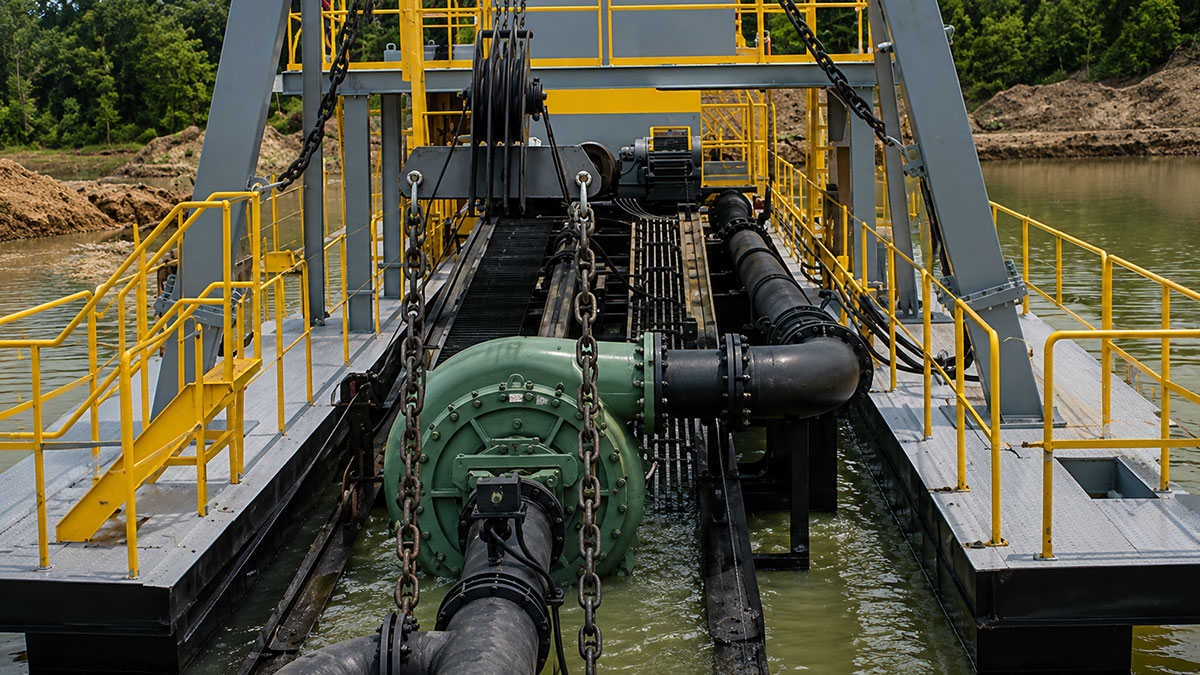
Percent solids is only one part of severity. A lower concentration of coarse, angular quartz can be more damaging than a higher concentration of soft rounded material. Density slugs, debris, entrained air, changing submergence, and discharge transients can dominate the seal event.
Define minimum, normal, maximum, and upset cases with a clear mass or volume basis. Include PSD and mineralogy wherever practical.
Coarse vs. Fine Material: Two Different Seal Problems
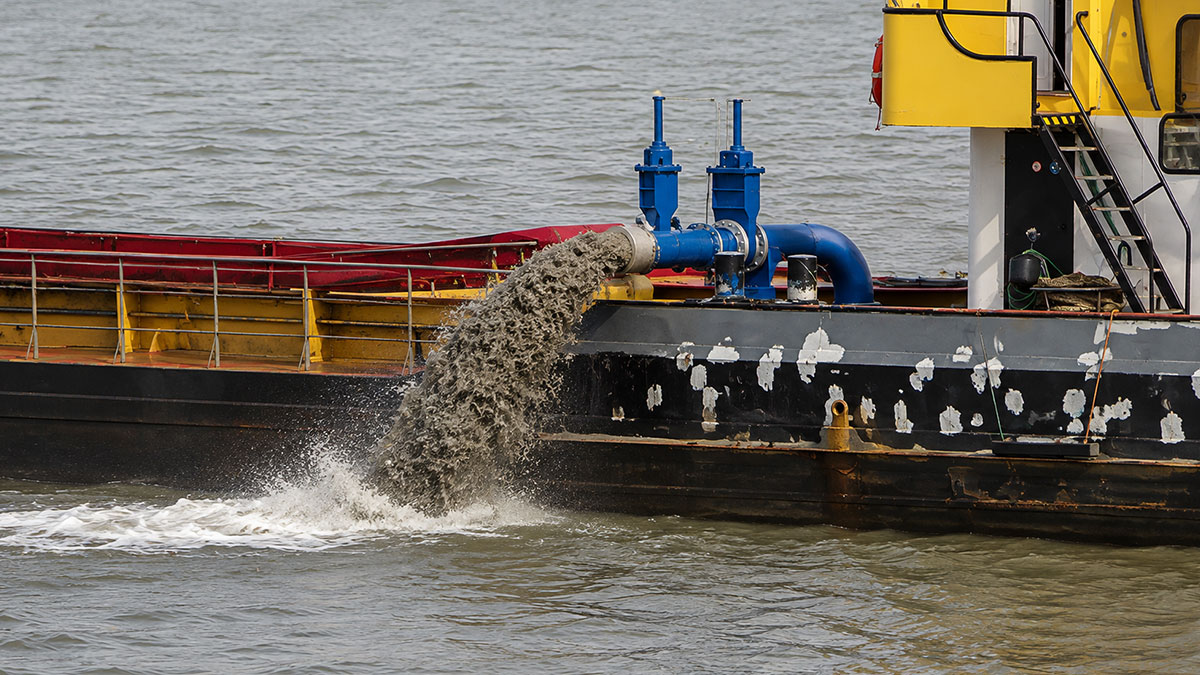
Coarse material (sand, shell hash, gravel-adjacent debris) stresses seal faces primarily through impact-hard, sometimes large particles striking the faces or getting trapped at the interface. This favors tougher, more impact-resistant face materials (tungsten carbide is frequently the stronger choice here over more brittle silicon carbide), and it puts a premium on restriction bushing clearance and flush velocity that’s actually sufficient to keep coarse particles from migrating into the seal chamber at all-once a large particle is at the interface, no face material handles that gracefully.
Fine material (silt, clay, fine sediment) wears seal faces through continuous micro-abrasion rather than impact events. This is closer to the classic abrasive wear mechanism, and it responds well to hard-on-hard face pairings with good thermal stability-silicon carbide’s low friction coefficient and heat dissipation are a real advantage in this duty, provided the process chemistry (brackish or saline water, in many dredging applications) doesn’t push toward a specific corrosion-resistant grade instead.
Mixed and variable material-the actual common case -is where a lot of dredge seal specs go wrong by optimizing for only one of the two problems above. A face material and flush plan chosen purely for fine-sediment micro-abrasion can fail quickly the first time the dredge pulls a load of coarse debris; one chosen purely for impact resistance may wear faster than necessary during long runs of fine silt. Matching seal selection to the actual range of material a specific dredge or application sees-not just the average-is what actually extends service life.
Flush Reliability Matters Even More in Dredge Service
If the selected arrangement depends on external flush, prove the supply across engine speed, generator load, remote hose length, clogged strainers, cold weather, shutdown, and restart. Measure at the seal connection—not only at the source.
Where water is limited or process dilution is unacceptable, evaluate a purpose-built flushless slurry seal or a controlled dual-seal support system. Each alternative has a different operating and maintenance burden.
Startup Is a High-Risk Moment for Dredge Seals
Dredges cycle on and off more than many fixed industrial pumps – repositioning, weather delays, shift changes. Every one of those standstill periods lets solids in the seal chamber settle, and that settled material is what the seal faces encounter at the next startup, often before flush flow has fully re-established. A quench arrangement that protects the seal during standstill (the same principle covered on our flush plans page) is frequently more valuable on dredge duty than on continuously-run process pumps, precisely because dredges stop and start so much more often.
Engineering Pros-and-Cons Framework
Use this matrix during failure review, design approval, and bid leveling. It exposes the trade-offs that a seal price or generic material name can hide.
| Dredge condition | Seal threat | Practical control |
|---|---|---|
| Coarse angular sand / gravel | Impact, face chipping, severe abrasion | Solids-tolerant architecture, tough materials, debris control, stable feed |
| Fine silt / clay | Packing, poor lubrication, sticky deposits | Chamber flow, clean-fluid strategy, shutdown cleaning, material testing |
| Air ingestion / suction upset | Cavitation, dry contact, temperature rise | Pump operation, submergence, alarms, quench or approved protection |
| Shutdown settling / restart | Packed chamber and unlubricated startup | Flush sequence, drain/clean plan, interlock and inspection |
What to Send for an Application Review or Quote
- Dredge and pump make/model, seal chamber, shaft size, drive speed, power, line diameter/length/elevation, expected pressure and vacuum cases
- Material layers, PSD, maximum particle/debris, particle shape/hardness, solids concentration and density range, organics, clay content and variability
- Operating sequence, submergence, priming, starts/stops, relocation, line clearing, cutter/head behavior, cavitation/air history and remote-control logic
- Current seal and support plan, water source/quality/pressure/flow, instrumentation, alarms, power-loss behavior, winterization and shutdown flushing
- Required leakage control, environmental constraints, seawater/brackish chemistry, access, spare strategy, maintenance capability, acceptance test and quote schedule
Frequently Asked Questions
Is coarse sand always harder on seals than fine silt?
Coarse angular particles raise impact and scoring risk; fines can enter clearances, pack components, and disrupt lubrication. Both can be severe in different ways.
Can a dredge seal be selected from pump size alone?
No. The material, pressure cases, speed, chamber, shaft condition, support utilities, and operating sequence are necessary.
What is the highest-risk operating event?
Startup after solids have settled or after protection flow was lost is a common high-risk case.
Should a dredge use a flushless seal?
Only when the selected design and verified duty support it. Remote water availability alone is not enough.
What should commissioning prove?
Correct installation, pump condition, support flow/pressure/temperature, alarms/interlocks, startup/shutdown sequence, leakage baseline, and stable operation across representative material.
Related HydroMax Seal Resources
- slurry seals for abrasive pumps
- pump seal product family
- seal support systems
- equipment-specific seals
- application engineering support
Request a Project-Specific Seal Recommendation
Send HydroMax the pump and seal identification, dimensional information, operating envelope, slurry solids and chemistry, current seal arrangement and materials, support-system details, failure evidence, delivery requirement, and approval criteria. The team can review whether the practical next step is a new slurry seal, an equipment-specific alternative, a support-system change, a repair assessment, or a verified cross-reference.
Request an Application Review and Quote or email sales@hydromaxseal.com.