

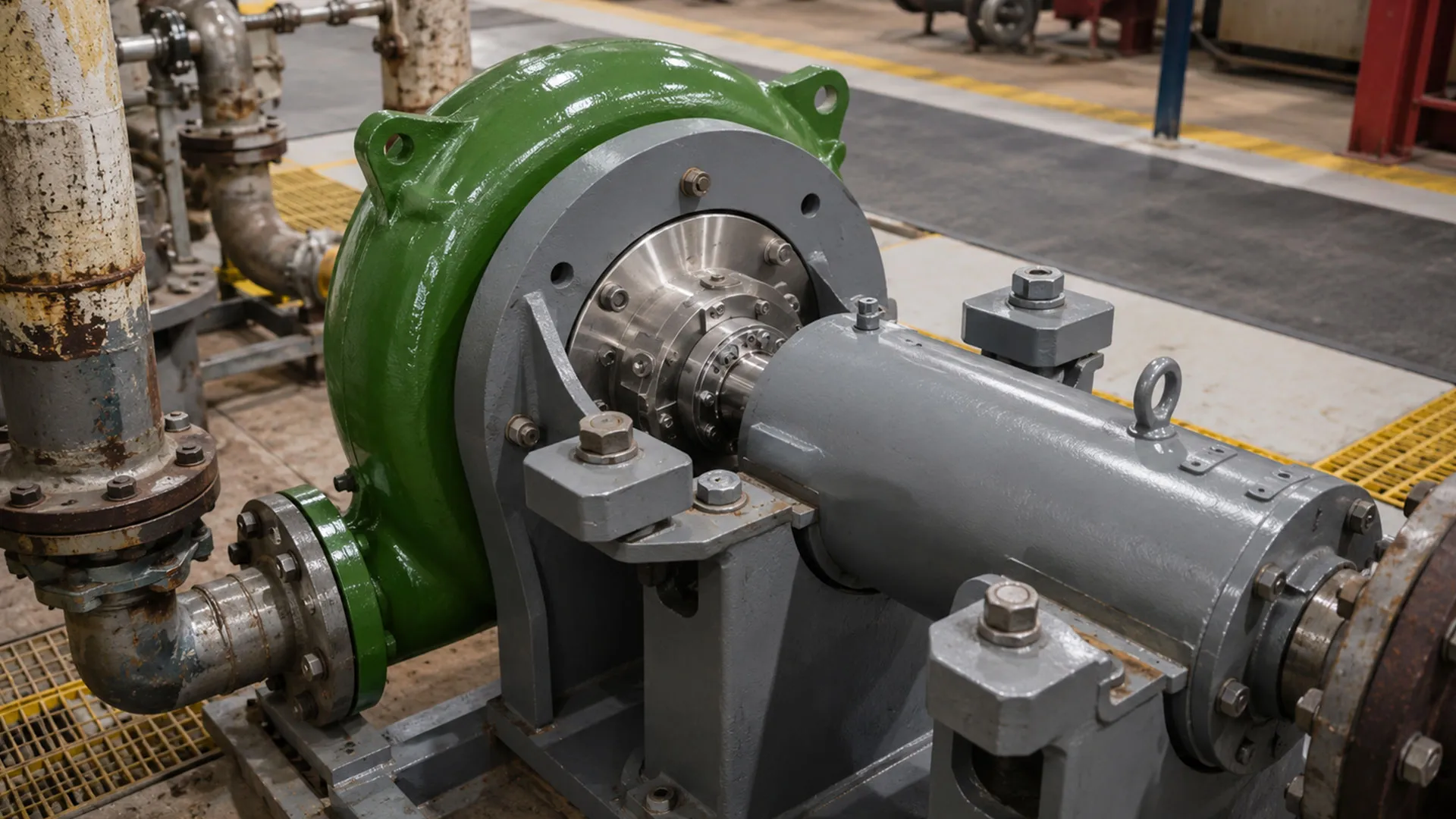

A procurement workflow for verified interchangeability—not a blind part-number swap.
A competitor slurry pump seal can often be cross-referenced from the OEM number, pump and chamber data, dimensions, arrangement, materials, support plan, and photos. But “drop-in” should be used only after the proposed seal’s interfaces, operating envelope, rotation, setting, utilities, and installation procedure are verified. Dimensional fit alone does not prove functional equivalence.
| KEY TAKEAWAY |
| Send the complete information package once: tag and nameplate photos, pump model/serial, current seal and gland photos, shaft/sleeve and chamber dimensions, piping/support plan, process data, failure history, required delivery, and approval criteria. Mark which dimensions are measured and which come from controlled drawings. |
Practical Engineering Perspective
In a cross-reference review, we treat unknowns as unknowns. A confident guess can become an expensive outage. The quickest responsible path is a controlled dimensional and application checklist, followed by drawing approval and incoming/installation verification.
This article reflects HydroMax Seal’s published product and service categories plus established mechanical-seal engineering practice. It does not claim that every duty has been field-tested or that any configuration guarantees a specific runtime. For a high-consequence or unfamiliar application, use verified equipment data, representative process information, technical approval, and written acceptance criteria before procurement.
What Actually Identifies a Seal Without a Part Number
Identification uses several independent clues: pump and equipment identity; shaft/sleeve and chamber dimensions; gland bolt pattern and porting; seal arrangement and balance; face, elastomer, and metal materials; support plan; rotation and setting; and process limits. Photos help, but controlled drawings and measured dimensions carry more weight.
Record measurement method and tolerances. Worn parts can misrepresent original dimensions.
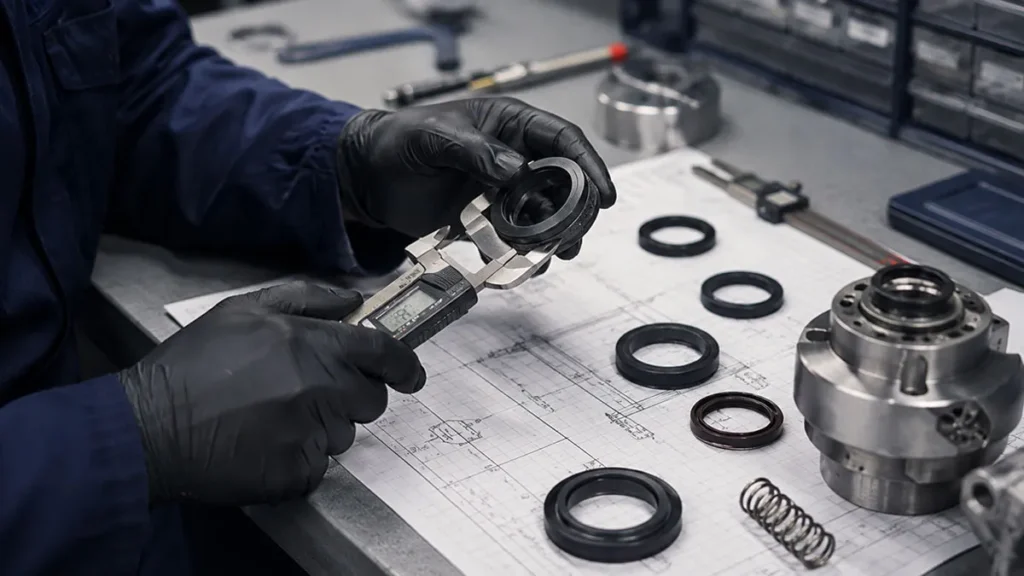
Direct Replacement vs. Upgraded Alternative
A direct replacement targets the approved mechanical and functional interfaces. An upgraded alternative intentionally changes a material, arrangement, geometry, or support requirement to address failure or risk. Both require application verification; the upgrade also requires change control, revised drawings/IOM information, spare strategy, and site approval.
Avoid calling an alternative “drop-in” until the responsible parties have approved the complete interface and installation plan.
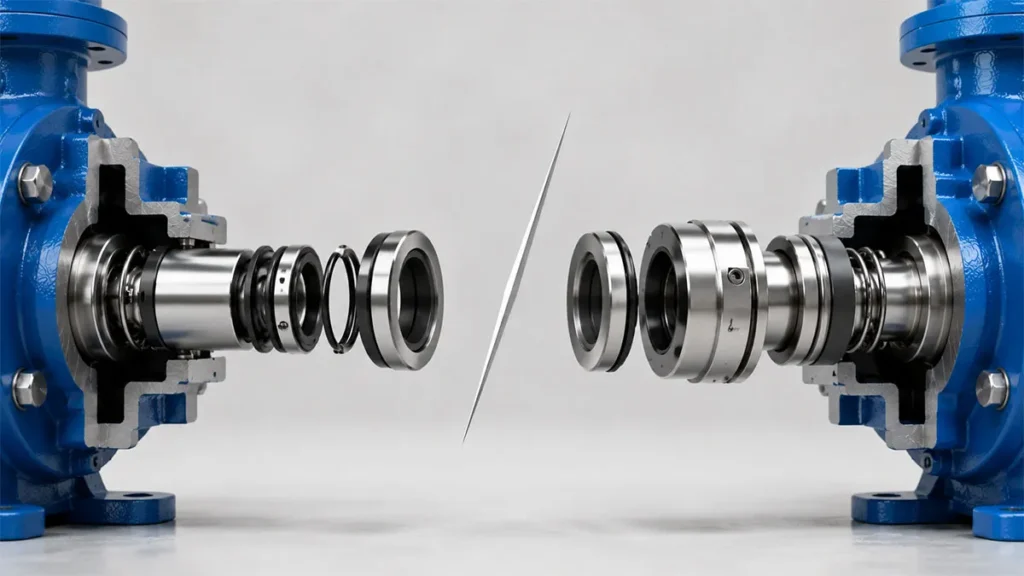
Why This Matters More for Abrasive Slurry Applications Specifically
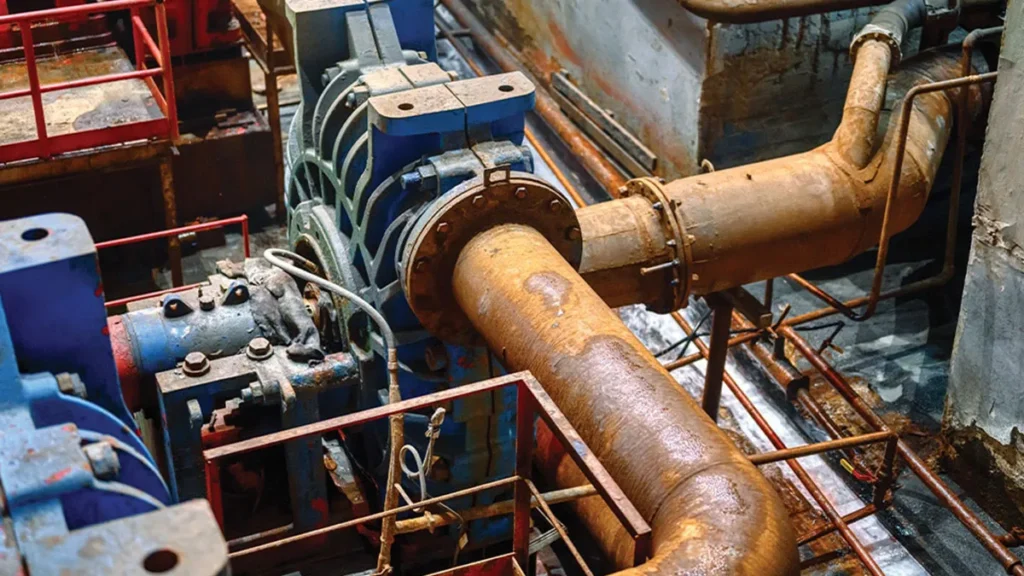
Slurry seal designs manage solids in different ways. Two seals that fit the same chamber may use different spring locations, clearances, face pairs, hard-facing, flushing, quench, or barrier requirements. Substituting dimensions without preserving—or deliberately changing—those functions can shorten life or create new operating dependencies.
What to Send for the Fastest Turnaround
For the quickest accurate cross-reference on a down pump:
1. Photos of the pump nameplate and the removed seal (or the seal chamber if the seal is missing/destroyed)
2. Pump make and model, if visible or known
3. Process fluid, approximate solids content, pressure, and temperature
4. How the original seal failed and how long it had been in service – this is what separates a same-again replacement from a genuine upgrade recommendation
Engineering Pros-and-Cons Framework
Use this matrix during failure review, design approval, and bid leveling. It exposes the trade-offs that a seal price or generic material name can hide.
| Verification layer | Required evidence | Release gate |
|---|---|---|
| Identity | OEM/competitor number, tag, pump model/serial, photos | Correct equipment and rotation confirmed |
| Mechanical interface | Shaft, sleeve, chamber, gland, bolts, ports, axial setting, clearances | Approved dimensional drawing |
| Functional equivalence | Arrangement, balance, faces, elastomers, metallurgy, support plan, limits | Application engineer approval |
| Execution | IOM, piping, tools, commissioning, spares, test and warranty | Site installation and startup plan approved |
What to Send for an Application Review or Quote
- OEM and competitor manufacturer/part number, revision, seal tag, equipment tag, pump make/model/serial and clear photos of installed and removed assemblies
- Controlled pump, seal chamber, gland and shaft/sleeve drawings; measured dimensions with method and tolerance; bolt pattern, ports, rotation and axial setting
- Current arrangement, balance, face/elastomer/metallurgy, support plan, barrier/flush/quench fluid, instruments, connections and installation procedure
- Normal/maximum pressure and temperature, speed, process/slurry solids and chemistry, duty cycle, startup/shutdown, hazards, leakage requirement and failure history
- Required date, quantity, spare strategy, drawing/submittal requirements, material certificates, inspection/test, witness points, warranty, change control and site approval contact
Frequently Asked Questions
Can photos alone identify a replacement?
Sometimes they identify the family, but a verified replacement normally needs dimensions, pump data, arrangement, materials, and operating conditions.
Does matching the shaft diameter prove interchangeability?
No. Chamber, gland, setting, ports, rotation, clearances, arrangement, balance, materials, and support requirements also matter.
Can a cross-reference improve reliability?
Yes when the original failure mechanism is understood and the change is engineered, documented, and verified.
Should the old part number remain on the purchase order?
Include the legacy reference and the approved new manufacturer/model/revision so receiving and maintenance can distinguish them.
What should be approved before shipment?
The dimensional drawing, materials, arrangement, operating limits, support requirements, test documentation, installation instructions, and any deviations.
Related HydroMax Seal Resources
- equipment-specific mechanical seals
- slurry seal product family
- cartridge seals
- repair competitor seals
- smart inventory and rapid response
Request a Project-Specific Seal Recommendation
Send HydroMax the pump and seal identification, dimensional information, operating envelope, slurry solids and chemistry, current seal arrangement and materials, support-system details, failure evidence, delivery requirement, and approval criteria. The team can review whether the practical next step is a new slurry seal, an equipment-specific alternative, a support-system change, a repair assessment, or a verified cross-reference.
Request an Application Review and Quote or email sales@hydromaxseal.com.