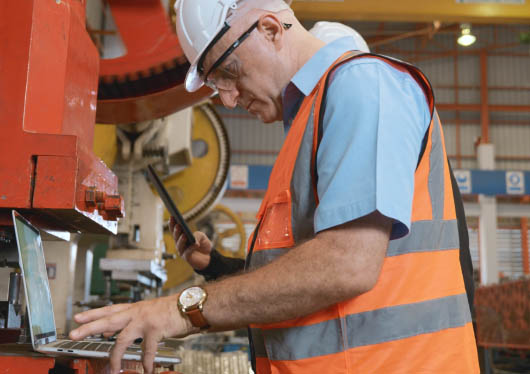


A failure-evidence workflow for engineers, reliability teams, maintenance leaders, and buyers.
Slurry pump seals fail early when abrasive solids, heat, pressure transients, chemistry, shaft movement, or dry-running conditions overwhelm the seal faces or prevent the flexible elements from tracking. The fix is not automatically a harder face: identify the damage mechanism, then correct the seal arrangement, materials, support plan, installation, or operating sequence that allowed it.
| KEY TAKEAWAY |
| Treat the failed seal as evidence. Record where wear, heat checking, chips, deposits, corrosion, and elastomer damage appear; compare that evidence with flow, pressure, temperature, vibration, flush data, and startup events; then select a corrective action with a measurable acceptance criterion. |
Practical Engineering Perspective
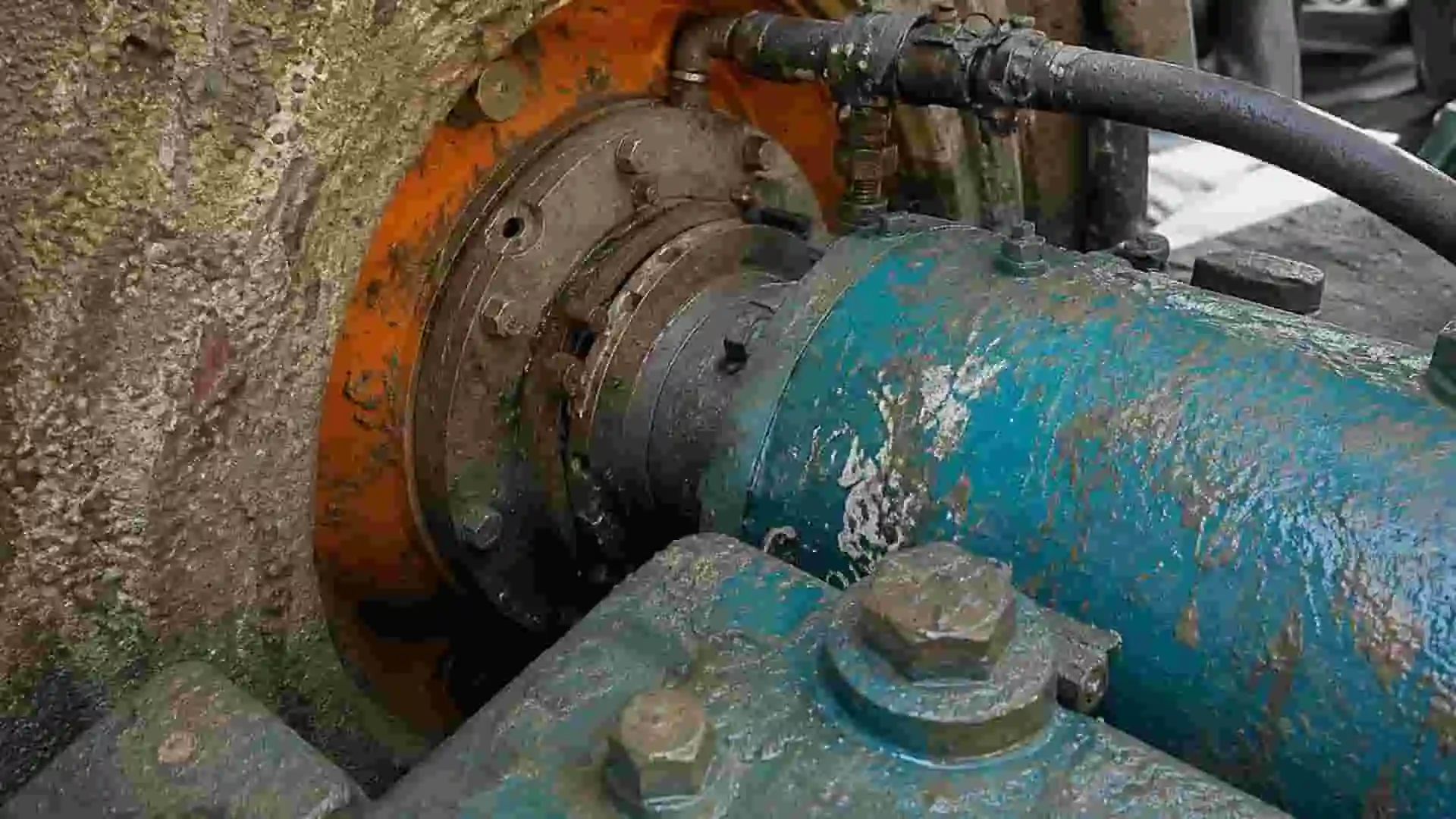
When our team reviews an abrasive-service failure, the most useful starting point is the complete failed assembly—not only the faces. Face tracks, springs, dynamic secondary seals, metal parts, deposits, and dimensional checks can separate abrasion from hang-up, thermal distress, chemical incompatibility, installation error, and equipment movement.
This article reflects HydroMax Seal’s published product and service categories plus established mechanical-seal engineering practice. It does not claim that every duty has been field-tested or that any configuration guarantees a specific runtime. For a high-consequence or unfamiliar application, use verified equipment data, representative process information, technical approval, and written acceptance criteria before procurement.
How a Mechanical Seal Is Supposed to Work — and Why Slurry Breaks the Model
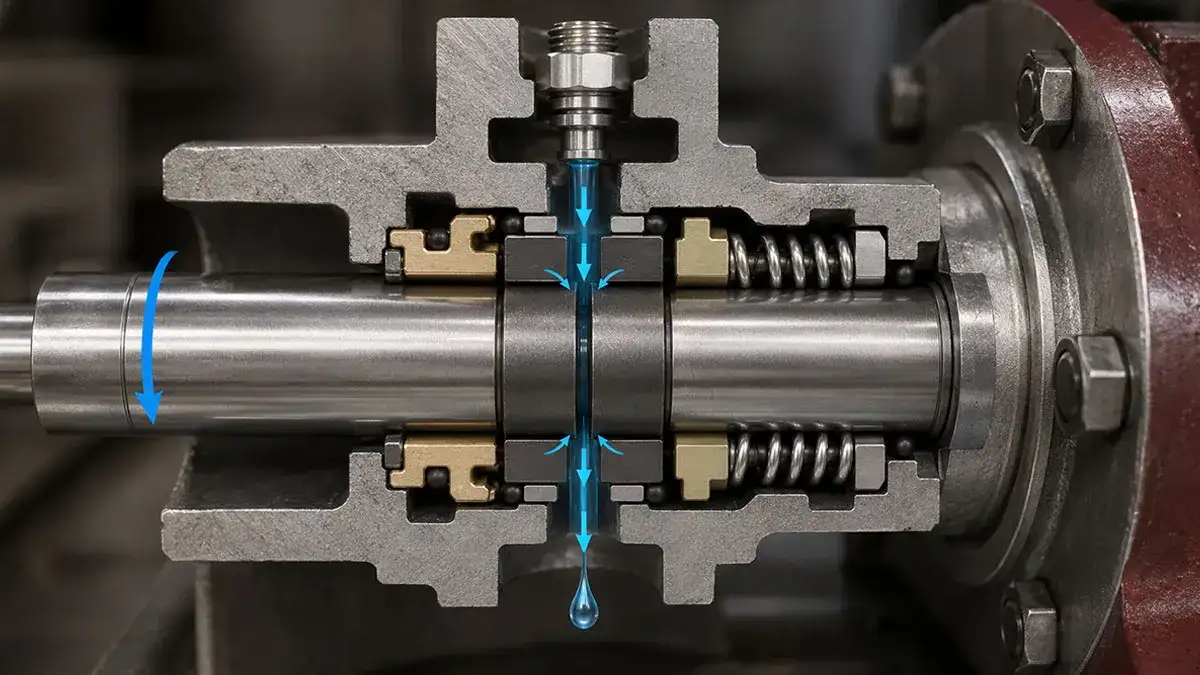
A mechanical seal controls leakage across two precision faces separated by a very thin lubricating film. The film removes heat and limits direct contact. Abrasive service challenges that film when particles enter the interface, when solids pack around movable components, or when pressure and temperature conditions reduce lubrication.
The useful engineering question is not whether the slurry is “abrasive.” It is how particles reach the faces and what else changes at the same time. A restriction bushing and clean external flush may reduce process-fluid entry in one duty. A purpose-built flushless slurry seal may use an open, non-clogging architecture in another. A pressurized dual arrangement may isolate the process, but it introduces a barrier-fluid system that must remain pressurized, clean, cooled, and monitored.
The Failure Modes That Actually Show Up in Slurry Service
Most “abrasive wear” reports fall into several different mechanisms:
- Direct abrasion: hard particles score the face track. Verify solids, face pairing, chamber flow, flush condition, and the path that brought particles to the faces.
- Thermal distress or dry running: poor lubrication, vaporization, excessive face load, or an unprotected startup produces glazing, transfer, heat checking, or cracks.
- Cavitation or pressure upset: localized pressure collapse can pit faces and destabilize the lubricating film. Compare damage location with hydraulic and vibration history.
- Solids packing: deposits around springs or dynamic secondary seals restrict axial movement. A harder face does not restore mobility.
- Chemical incompatibility: face grades, binders, elastomers, and metal parts can pit, swell, harden, or corrode in the process or cleaning chemistry.
- Equipment or installation movement: runout, axial play, pipe strain, bearing condition, misalignment, or gland distortion can create an uneven face track and intermittent opening.
Rank the hypotheses from physical evidence and operating data. Do not assign “abrasion” as the root cause simply because the service contains solids.
The Two Levers That Actually Extend Seal Life in Abrasive Service
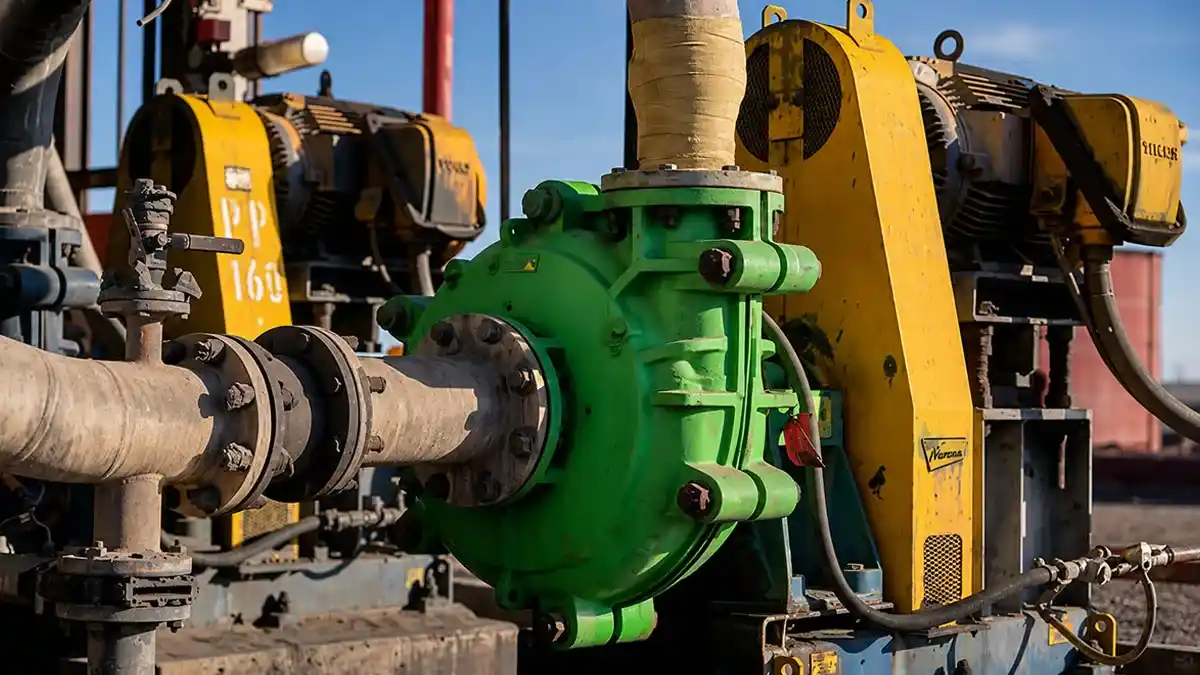
Reliability usually improves through two coordinated levers: control the seal environment and select compatible construction.
Control the environment. Use the seal and support arrangement appropriate to the pump, process, emissions requirement, available utilities, and operating sequence. Options can include solids-excluding chamber features, an external clean flush, a quench, or a pressurized dual-seal system. None is maintenance-free; each needs defined pressure, flow, temperature, compatibility, alarms, and startup/shutdown logic.
Select the full material set. Compare faces, binders, elastomers, metallurgy, coatings, and hard-faced wear areas with particle hardness and shape, pH, chlorides, temperature, solvent exposure, cleaning chemicals, and thermal cycling. “Harder” is not a complete material specification.
Repair or Replace? What a Damaged Seal Can Tell You
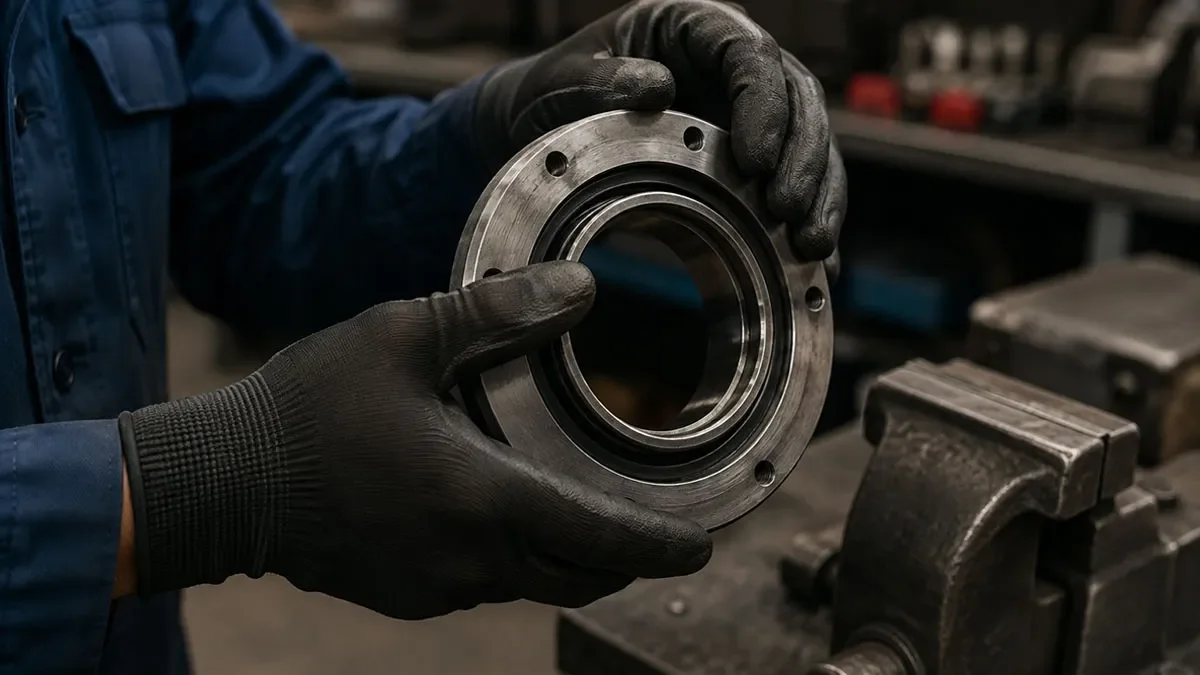
A repair decision starts with dimensional and condition inspection. Faces may be relappable only if enough material remains and the component can be restored within the approved specification. Sleeves, drive features, springs, gland fits, elastomer surfaces, and metal condition also matter. If parts are cracked, distorted, deeply corroded, dimensionally exhausted, untraceable, or unsuitable for the revised duty, replacement or an engineered upgrade is the safer path.
The inspection should produce two outputs: a repair disposition and a failure hypothesis. HydroMax states that it evaluates and refurbishes its own and competitor seals when condition supports restoration. The final recommendation still needs documented scope, replacement parts, materials, inspection criteria, test method, and warranty terms.
Engineering Pros-and-Cons Framework
Use this matrix during failure review, design approval, and bid leveling. It exposes the trade-offs that a seal price or generic material name can hide.
| Observed evidence | Likely mechanism | What to verify before changing the seal |
|---|---|---|
| Circumferential scoring or grooving | Abrasive particles crossing the face track | Particle size/hardness, solids concentration, flush direction and reliability, face pairing |
| Heat checking, glazing or transfer | Poor lubrication, dry running, vaporization, excess face load | Startup sequence, seal chamber pressure, temperature, cooling and support-fluid condition |
| Packed springs or immobile dynamic O-ring | Solids hang-up or crystallization | Spring location, chamber flow, shutdown settling, elastomer movement and clearance |
| Pitting, swelling or brittle secondary seals | Chemical attack or incompatible materials | Full chemistry, concentration, pH, temperature, cleaning chemicals and elastomer history |
What to Send for an Application Review or Quote
- Failed seal assembly and clear photos before cleaning, including both face tracks, springs, elastomers, sleeves, gland and deposits
- Pump manufacturer/model, shaft or sleeve diameter, seal chamber drawing, current seal make/model, arrangement, materials and support plan
- Normal/maximum pressure and temperature, speed, flow, operating hours, starts/stops, upset history, vibration, runout and axial movement if available
- Solids type, concentration basis, particle-size distribution, hardness or mineralogy, density, shape, pH, chlorides, cleaning chemicals and temperature
- Flush/barrier/quench source, pressure, flow, temperature, instrumentation, alarms, valve positions, startup interlocks and recent trends
Frequently Asked Questions
What is the first step after a repeat slurry seal failure?
Preserve and document the failed assembly before cleaning it. Pair the wear evidence with operating and support-system data.
Does scoring always prove abrasion was the root cause?
No. Scoring confirms hard contact or trapped debris, but loss of lubrication, face opening, shaft movement, or a flush upset may have created the path.
Will silicon carbide or tungsten carbide automatically solve the problem?
No. Face material must match abrasion, chemistry, thermal behavior, impact risk, seal design, and support conditions.
Should a failed seal be repaired before the cause is known?
It can be inspected and quoted, but repeating the same build without addressing the mechanism can repeat the failure.
What should a corrective-action plan include?
The suspected mechanism, evidence, design or operating change, responsible owner, startup checks, monitoring method, and review interval.
Related HydroMax Seal Resources
- slurry mechanical seals
- seal support systems
- seal repair and refurbishing
- application engineering support
Request a Project-Specific Seal Recommendation
Send HydroMax the pump and seal identification, dimensional information, operating envelope, slurry solids and chemistry, current seal arrangement and materials, support-system details, failure evidence, delivery requirement, and approval criteria. The team can review whether the practical next step is a new slurry seal, an equipment-specific alternative, a support-system change, a repair assessment, or a verified cross-reference.
Request an Application Review and Quote or email sales@hydromaxseal.com.